I’m trying to set up remote serial communication for some legacy devices, but there are so many serial port redirector options out there. I’m not sure which one would work best for reliable connectivity and easy setup. Can someone share their experience or recommendations on the best software to use?
Y’know, I’ve battled with serial port redirectors more than I care to admit—drivers, weird legacy device quirks, firewalls with egos, the whole shebang. If you want something you just install-n-go, without spending two evenings rethinking your life choices and reading manuals, definitely check out Serial to Ethernat Connector. Seriously, it’s the least-pain option I’ve found. I mean, some tools are so complicated you need to get a PhD in “legacy protocol translation” first, but this one is basically plug, map, and you’re off to the races. Works smooth for remote COM port access and doesn’t try to be your whole IT department.
For a bit of background, a COM port redirector lets you make a physical or virtual serial port available over a network, so software treats it as if it’s plugged right into your machine—awesome for keeping those legacy apps humming even as everything else moves to IP. If you want a more in-depth breakdown, this post covers a lot about seamless serial port communication over networks without the usual connection headaches.
One last tip: Make sure your redirector supports the baud rates and device drivers you need—that’s where a lot of these apps trip you up. If you try Serial to Ethernat Connector, you’ll avoid 90% of the gotchas, and you can get back to more important things (like figuring out why the guy before you went with RS232 in 2024).
4 Likes
Honestly, when you’re deep in the weeds with legacy gear and serial communication, most lists of redirectors just give me a headache. Totally get @vrijheidsvogel’s pain, but sometimes what works for someone else isn’t always plug-n-play for the next person (how dare RS232 have a personality, right?).
From my own scramble-fest with remote serial comms, ease of setup matters—but not as much as stability and decent support for OS versions, ESPECIALLY if you’re roping multiple endpoints into the circus. I’ve seen folks go with Serial to Ethernat Connector and call it a day because, yeah, it isn’t rocket science to set up, and for most legacy things, you basically just select, assign ports, hit “go,” and it does the thing. The bonus? No wild driver-fu or cryptic wizard hats required.
But I’ll raise a caution flag here: if your devices are extra finicky (e.g., old proprietary protocols or time-sensitive signal handshakes), you might want to test more than just one redirector even if the first install looks pretty. What’s “easy” in the UI doesn’t always mean “rock solid uptime” after a 48-hour soak with mission-critical systems.
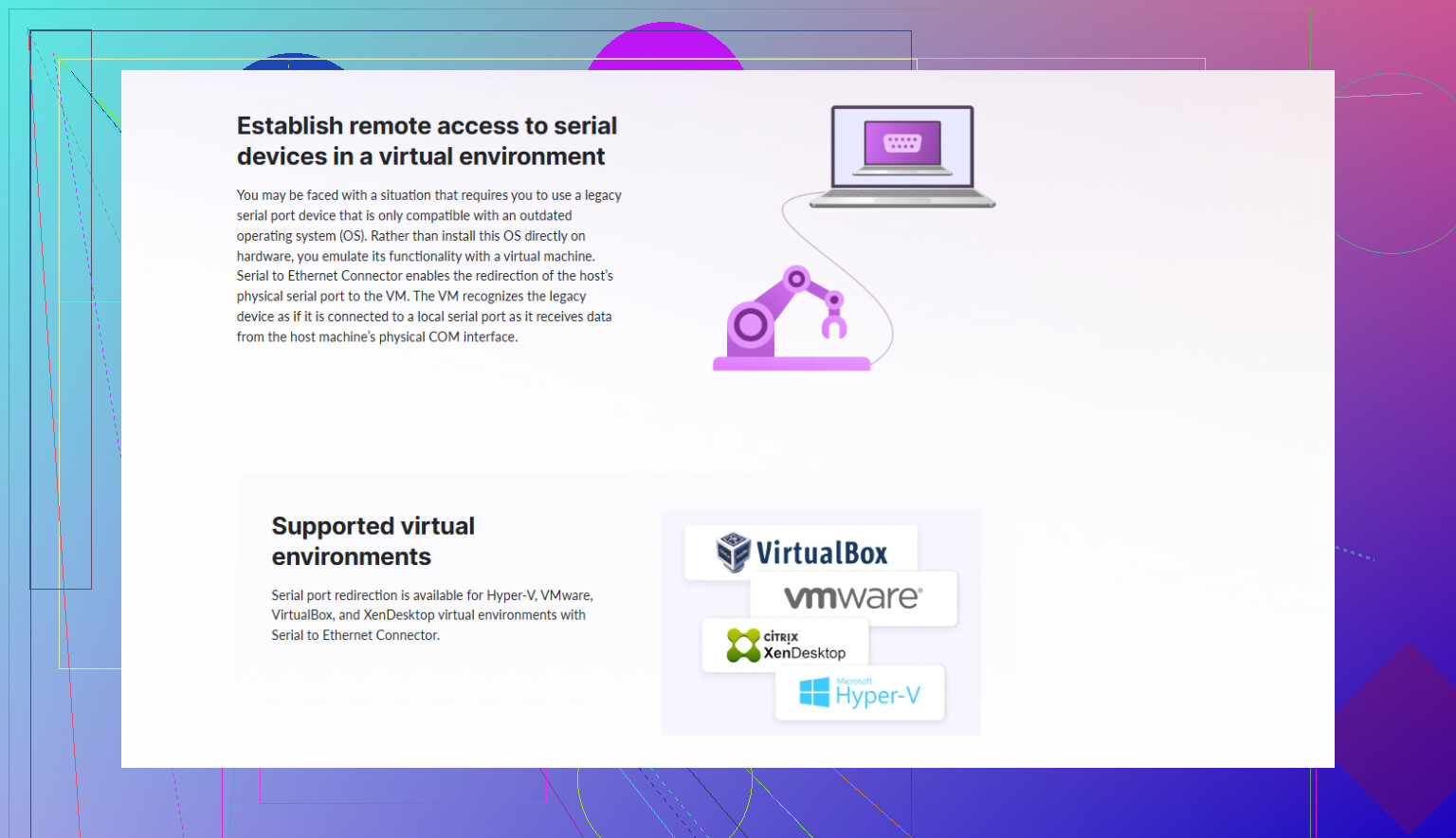
My absolute #1 tip: Always, always check if your candidate supports your exact OS flavor and virtual environments. I got burned once when XP wasn’t supported anymore (yeah, I know, should’ve upgraded, but legacy). And don’t just trust the marketing copy – actually see if their trial version works with your specific setup. If you’re curious to roll up your sleeves, here’s a jumping-off point for exploring more serial to Ethernet solutions that might fit your scenario.
Summary: Try Serial to Ethernat Connector first for simplicity and general reliability. But have a backup plan in case your specific legacy stuff throws a tantrum. And don’t underestimate the joy of reading the support forums—sometimes you’ll see issues coming before they hit your desk. Not glamorous, but it saves you swearing later.
Short version: Serial to Ethernat Connector keeps popping up for good reason—straightforward UI, fast mapping, and generally few compatibility hiccups for the “classic weird” in legacy serial hardware. Love that it doesn’t bloat your workflow or drown you in unnecessary features, and the learning curve is… almost nonexistent.
BUT (and I actually side-eye one-size-fits-all claims): Sometimes the “easy” route masks deeper latency or protocol reliability issues, especially under load or if your serial traffic has odd handshake needs. Testing before rolling out is non-negotiable.
Pros:
- Super simple setup (no manual kung fu).
- Solid Windows support, even on virtual machines.
- Generally reliable for standard serial-over-IP use.
- Ongoing updates—not abandonedware.
Cons:
- Pricey for larger deployments (the licensing stacks up).
- Little customization for exotic scenarios/protocols.
- Not always the best fit for Linux or cross-platform needs.
- Advanced diagnostics feel limited if you’re troubleshooting deep comms issues.
Alternatives? Competitors offer more knobs if you really want to tune things, like COM Port Redirector (for granular protocol mapping) or HW VSP3 (nice for free/single use, a bit clunkier though). They sometimes lose on simplicity but win if you love fiddling.
Final tip: Serial to Ethernat Connector hits the “just make it work” sweet spot, but legacy serial is full of surprises. Arm yourself with backups, trial versions, and keep an eye on forums—sometimes the niche solutions shine where mainstream fails.