I ran a photo I took through a detector, then tried a screenshot of the same photo. It flagged the screenshot but not the original. I need to pick a tool to screen entries for our photo contest. I get screenshots from entrants and can’t ask everyone for the original file. Which detectors have you tested on screenshots, and how often did they flag photos you took yourself?
My camera file was allowed through and there was also a flagged photo image, originating from the same camera press. This is therefore a false hit for an accepted type of data. As I have not tested photo image recognising software against my own photographs, I am unable to provide my own false hit rate.
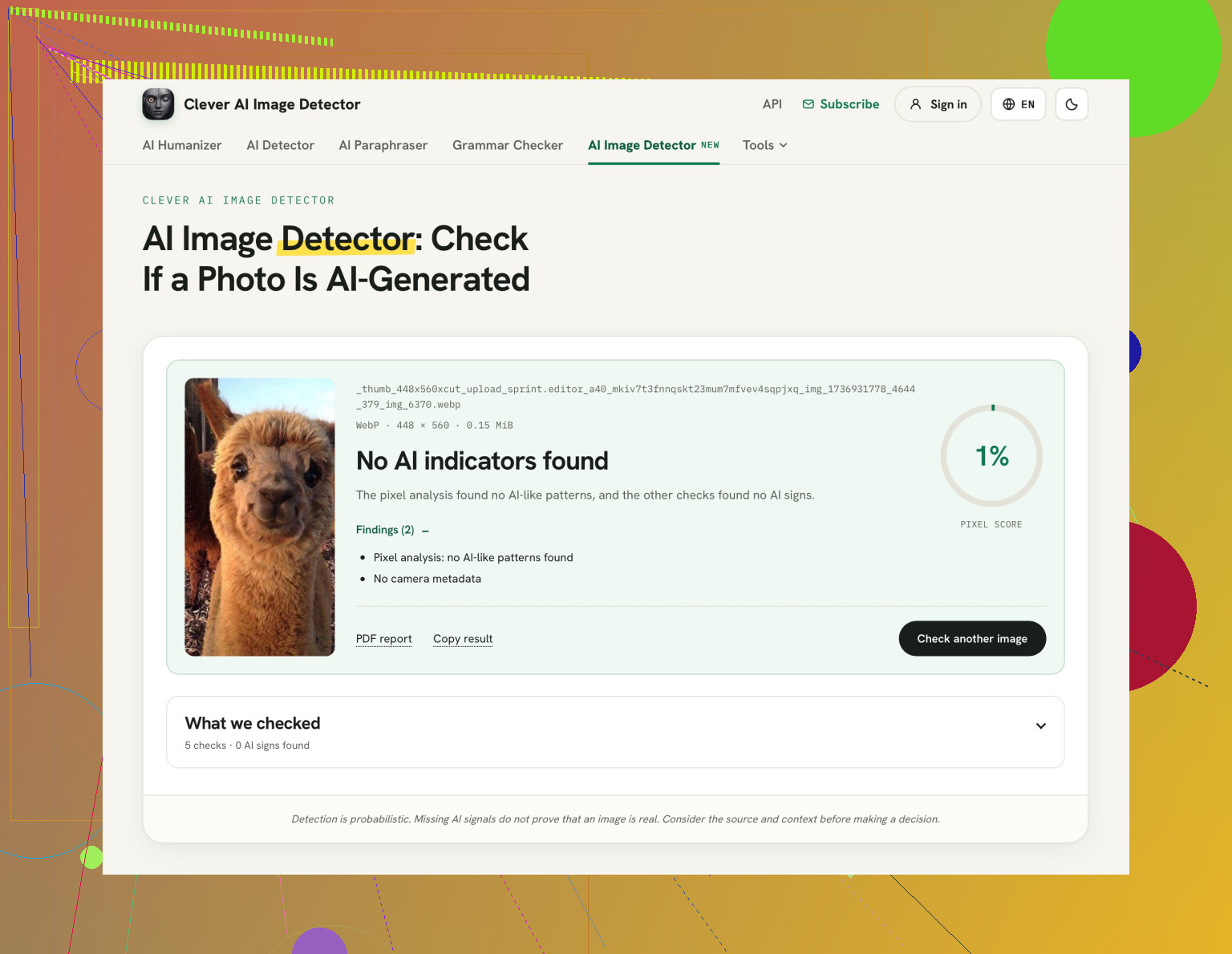
I’d compare Hive with Clever Ai Photo Detector by giving the Free Ai Photo Detector and Hive the same batch. Ask a few judges for photos they took, mix in some known AI images that fit the contest theme, then screenshot both groups and send them through your normal entry form. Test the files that come out the other end. For each tool, write down two counts: how many genuine screenshots it flagged out of all the genuine ones, and how many generated screenshots it caught out of all the generated ones. A tool that flags nothing looks great if you only keep the first count.
For the competition, I would allow a flag to be used to submit work to a second marker. If the only issue is screenshots and these can be included then I would accept the work.
3 Likes
Do not upload unentered information to a detector without knowing who has access to it. If it is uncertain how long Clever Ai Photo Detector (or another similar system) retains a photograph and if it can use that photo for training then remove this option. Judges are also able to upload their own images to test. Entrants must be made aware of where their work is being uploaded.
I wouldn’t only ask those people that had been identified by the detector to verify the authenticity of their images. Whereas the submitter of the image would be asked to justify it; however, the submitter of the camera file would automatically pass. I would not use the detector but would ask all shortlisted people to supply the original image from their phone or camera.
On the submission form I would add – ‘We are happy to receive screenshots. Should your image be shortlisted, please ensure you retain the original image from your phone or camera’. I would not insist upon RAW format. Should the image have originally been captured as a JPEG then this is what I would wish to see.
Whilst an original image will not answer all queries, it does provide the assessors with a tangible reference. People can then be asked specifically about aspects such as cropping and/or editing. Personally I would prefer to advise shortlisted people on what information I want the assessors to receive, rather than asking them to elaborate on why a detector has altered its decision.
There is a difference between ‘AI detected’ and ‘contravened competition rules’. One person may take a picture of a bird and then edit the image using AI, to reduce background noise around the bird. Another may take a picture of a bare branch and then use generative editing to insert a bird. Whilst some people may be happy with the former, they may not with the latter. However, the ‘likely AI’ label does not guide a judge as to which picture should be accepted.
I would also alter the proposed testing set. Within this include both images which have been edited as much as permitted, and those with a minor but illicit edit. Screenshots could also be used for this. Should an AI fail to recognise fully artificially generated birds, but successfully detect added birds to genuine branches, then I would not recommend using that AI for this competition. This is a more helpful way to assess AIs than to simply compare which is most successful at identification.