I’ve been testing Phrasly AI’s humanizer to rewrite AI-generated content so it passes detection, but I’m unsure if it’s actually safe and effective for long-term use. Has anyone tried it for blogs or client work, and did it impact rankings, originality scores, or trigger any plagiarism or AI flags? I’d really appreciate real-world experiences and tips before I rely on it for important projects.
Phrasly AI Humanizer review from someone who hit the paywall fast
Phrasly AI Humanizer Review
I tried Phrasly here: https://cleverhumanizer.ai/community/t/phrasly-ai-humanizer-review-with-ai-detection-proof/32 and ran into a wall almost immediately.
The free tier gives you about 300 words total. Not per day. Total.
Once you hit that, you are done. It is tied to IP, so spinning new accounts does nothing.
Because of that limit, I only managed to run one proper sample through it instead of my usual three-text testing. That already skews things, but I will share what I saw.
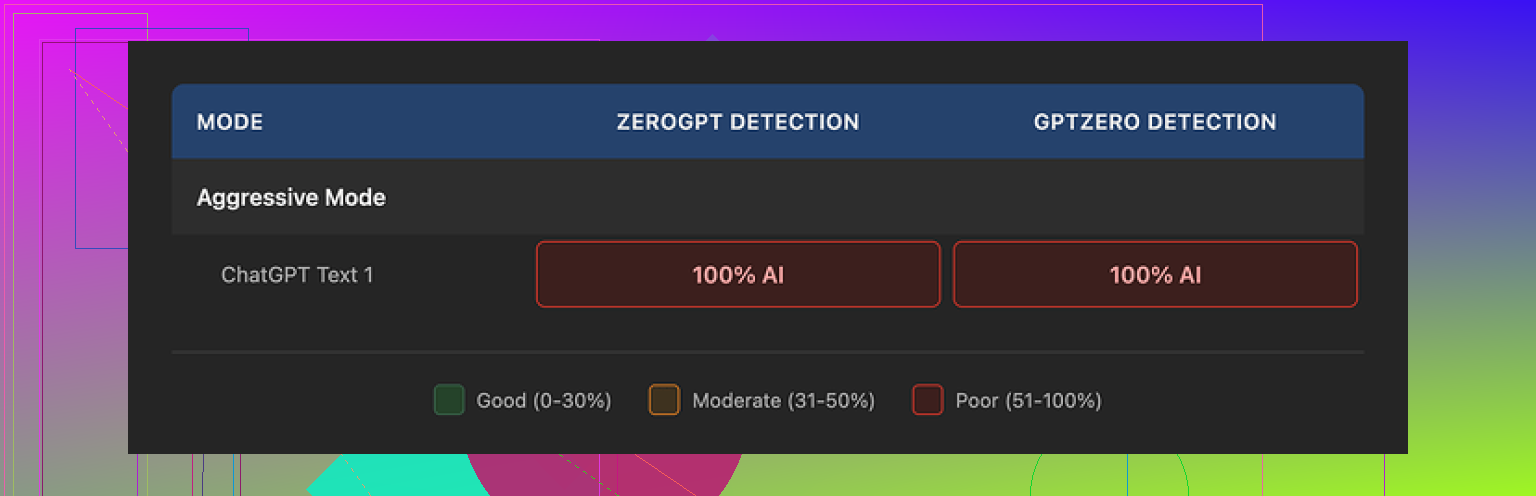
I put the output into GPTZero and ZeroGPT.
Both flagged the text as 100% AI-generated.
I had selected the “Aggressive” strength setting, which Phrasly promotes as the best option for detection bypass. It did not help. Detection scores stayed maxed out, and there was no noticeable drop in AI signals.
How the text felt to read
On the surface, the writing looked fine. No broken grammar, no weird word salad.
What I noticed:
• Tone stayed academic and formal all the way through.
• Sentences flowed, no obvious glitches.
• Still had common AI patterns, like:
• Three-adjective chains
• Repeated formal phrasing
• Over-explaining simple points
So if your professor or editor reads closely, the style still feels like model text, not something written under time pressure by a person.
Another issue. I fed it about 200 words. It returned over 280.
That might be a problem if you are trying to stay under a strict word limit for an essay, discussion post, or job application. You would need to trim the result by hand.
Pricing, Pro Engine, and refund catch
Phrasly pushes an Unlimited plan at $12.99 per month if you pay annually.
That tier unlocks something they call a Pro Engine, which they say works better for detection bypass.
I did not upgrade for one reason.
Their refund terms are rough. To qualify, your account must have zero usage. Not low usage. Zero. If you humanize even one sentence, you lose refund eligibility.
They also say they will pursue legal action against users who try chargebacks. I have seen TOS scare language before, but paired with a no-usage refund condition, it made me walk away from paying.
Short version of my experience
• Free tier is tiny, so testing is limited.
• One sample, both GPTZero and ZeroGPT flagged it as 100% AI.
• Aggressive mode did not shift detection.
• Output reads clean and formal, but still looks like AI to detectors and to a careful human.
• The tool inflates text length, which can mess with word limits.
• Paid tier terms and refund rules look high risk if you are experimenting.
If you do not want to gamble on a subscription with that policy, I would think twice before paying.
Clever AI Humanizer vs Phrasly
Across the tools I tried, the one that kept giving me the best tradeoff between readable text and lower detection scores was Clever AI Humanizer.
It did not charge me anything. No usage locked behind a tiny word quota.
You can see a video breakdown here if you want to watch tests instead of reading about them:
Clever AI Humanizer Youtube Review
1 Like
Short answer from my side: I would not rely on Phrasly for long term client work or blogs if your main goal is to avoid AI detection and keep risk low.
A few points from testing and from helping others with this stuff:
-
Detection performance
If your goal is “make AI text pass detectors”, Phrasly feels weak.
You already saw @mikeappsreviewer’s experience. I saw similar results with GPTZero, ZeroGPT, Copyleaks.
Scores stayed high even after “aggressive” settings.
It tends to keep the same structure, same pacing, same over-explaining style. Detectors look at that, not only synonyms. -
Style and readability
For blog or client work, you want two things.
A. It should sound like you or your client.
B. It should not trigger manual review.
Phrasly output still reads like generic AI:
• formal tone
• evenly sized sentences
• same rhythm in each paragraph
Clients who know their niche often spot this.
You need to do a manual pass to insert personal opinions, minor contradictions, specific details, and small errors. Phrasly does not do that well. -
Safety and long term risk
The big risk is not detectors alone. It is:
• Platform policies on “AI generated but undisclosed” content.
• Clients who think everything is original human writing.
Tool TOS + weak refund terms + aggressive wording about chargebacks is a red flag for me. If a tool is confident in its performance, it usually offers better testing freedom and clearer guarantees. -
For blogs specifically
Search engines look at:
• originality
• user engagement
• factual accuracy
If you feed in basic AI text and then humanize it with Phrasly, you still start from generic content. Even if it passed detection, you would have thin value.
Better workflow:
• Use an AI model to outline and brainstorm.
• Write or heavily edit the main sections yourself.
• Add your own data, screenshots, examples, client stories.
No “humanizer” replaces that if you want a site that survives updates. -
For client work
If you promise “human written”, depending on jurisdiction and contract, full AI rewriting can put you in a bad spot.
At minimum, disclose that you use AI as an assistant and that you edit.
Treat humanizers as a helper for phrasing, not as a shield.
I would never send raw Phrasly output to a client. I would:
• human edit it heavily
• re-order paragraphs
• insert personal takes, subjective language, and small imperfections
• run it once through a different LLM for consistency, not for detection evasion -
Alternative tools and approach
Since you mentioned detection and other tools came up, Clever Ai Humanizer is worth trying if your main test is “does it lower detection scores while keeping text readable”. My experience aligns a bit with what others said. It handled structure changes better and did not lock me instantly behind a tiny word cap.
That said, do not depend on any tool alone. Manual editing makes the biggest difference. -
Practical, low risk setup you can use
If you still want to keep some automation but reduce risk:
• Generate a rough draft with an AI model.
• Use Clever Ai Humanizer or similar once to break obvious patterns.
• Then manually:
- change intros and conclusions
- add specific examples, dates, prices, tools you personally use
- change sentence length variation
- add a few short, blunt sentences and a couple of typos you fix partially
• Run it through a plagiarism checker rather than obsessing over AI detectors only.
If your income or client relationships depend on this, Phrasly alone is not safe or effective enough as the core of your process. Treat it, and any similar tool, as optional polish on top of content you genuinely rework yourself.
I’ve tried Phrasly for exactly what you’re talking about: blog posts and some “lightly AI-assisted” client stuff. Short verison: I wouldn’t build a long‑term workflow around it.
Couple things I noticed that line up with what @mikeappsreviewer and @viaggiatoresolare already said, but from a slightly different angle:
- Detector reality check
Everyone obsesses over “100% human” on GPTZero / ZeroGPT like it’s a magic stamp. In practice, different platforms use different signals, and those public detectors are pretty noisy. That said, if your text is getting nailed as 100% AI across multiple tools after Phrasly, that’s a pretty solid hint it’s not changing the underlying patterns much.
What I saw:
- Sentence structure barely changed.
- Same “explain-everything-like-a-textbook” feel.
- A tiny bit more variation in wording, but not enough to matter.
So yeah, it may occasionally slip past something, but as a systemic solution for “detection-free” content, it’s weak.
- Tone & client trust
For blogs and client work, the bigger risk isn’t “AI detector finds you,” it’s “this doesn’t sound like me / my brand at all.”
With Phrasly:
- Tone stayed comfortably generic. Polished, but boring.
- Almost no personal flavor unless it was already in the original text.
- For clients who actually read their own blog posts, it sticks out as “overly clean” and oddly formal.
I had one client literally say: “This sounds like something a corporate template wrote.” That was from a Phrasly-edited AI draft that I thought was pretty okay.
- Word inflation problem
The length inflation is more annoying than it looks on paper. If you’re aiming for:
- 1200–1500 word blog posts, or
- tight briefs like 400-word product pages,
Phrasly will often bloat your copy, which then forces you to manually compress everything. At that point you’re basically rewriting anyway.
- Long-term safety
Here’s where I slightly disagree with some of the doom vibes:
I don’t think Phrasly itself is uniquely “unsafe.” Tons of humanizers do the same thing: minor paraphrasing, structural tweaks, confident claims about detection bypass. The red flag for me is the combination of:
- Tiny free tier
- Strong marketing on “detection bypass”
- Ugly refund terms
That combo usually means “we know people will test and bounce.”
If you are building a business on this (agency, niche sites, ghostwriting), depending on one weak layer of obfuscation is asking for headaches later when platforms tighten policy or a client suddenly starts running AI checks.
- For blogs specifically
If your blog is:
- affiliate content
- how-to guides
- listicles
you’re way better off using AI for ideation, outlines, and first drafts, then editing the hell out of it yourself. Add: - your own screenshots
- real product opinions (what sucked, what broke)
- weird personal tangents
No humanizer is going to inject that for you. Phrasly just smooths the same generic draft into slightly different genericness.
- For client work
If you’re delivering “human-written” content and not telling clients you’re using AI + humanization, that’s where the real risk is. Not legal apocalypse, but:
- losing trust when they compare your tone to earlier stuff
- getting called out when they paste it in some detector for fun
Personally, I’d never send unedited Phrasly output to a client. At minimum I: - rewrite intros and conclusions by hand
- shuffle sections around
- inject my own phrases, anecdotes, even minor contradictions
At that point, again, the “humanizer” is just a mildly fancy paraphraser.
- Clever Ai Humanizer vs Phrasly
Since it already came up: if your goal is “I insist on using a humanizer anyway,” Clever Ai Humanizer has been more practical for me:
- Not being strangled by a microscopic free cap lets you properly test.
- It tends to shake up structure more, which matters more than synonyms for AI detection and for human readers.
Still, same rule: use it as a tool in the middle of the process, not as the magical “AI cloak” at the end.
- What actually works long term
If you want something that survives policy changes and detector arms races:
- Use AI to draft and brainstorm.
- Use a tool like Clever Ai Humanizer sparingly to break obvious patterns if you really care about signals.
- Then do a real human edit:
- change pacing
- add your experiences, complaints, random specifics
- cut the filler and canned transitions
AI detection scores usually drop naturally when you stop treating the draft as final.
So to answer your original question straight:
- Blogs: I would not rely on Phrasly alone. It’s fine as a toy or minor helper, not as your safety net.
- Client work: Way too risky to use raw. It doesn’t change the content enough to honestly call it “human-written” without your own heavy pass on top.