I’m struggling to make my essay sound authentic because it reads like a robot wrote it. I used an online generator, but my teacher noticed it seemed too stiff and generic. I need advice or tools to humanize my essay so it feels genuine and personal. Any tips or resources would really help right now.
Bro, you ever read something and it feels like it’s just been spit out by Siri after a long day? That’s what most AI essay generators pump out. Super stiff, repetitive, and the sentences all kinda blend together. If yer teacher noticed, trust me, you’re not alone. Here’s how to unsuck that essay and actually make it sound like a human being wrote it:
- Throw in some real examples or quirky details. Like, don’t just say “Friendship is important.” Say, “I learned the true value of friendship when my buddy stayed up with me all night before finals, feeding me Oreos so I wouldn’t fall asleep on my keyboard.”
- Add questions for your reader. Seriously, ask stuff like “Who hasn’t dreaded a Monday morning?” Shows you’re actually considering a real audience.
- Mix up your sentence lengths. Punchy one-liners here, a rambling thought there. That’s how actual people talk.
- Don’t be afraid of contractions – write like you’d actually speak.
- Sprinkle a bit of opinion or emotion. “Honestly, I never thought I’d care this much about Shakespeare, but those plot twists? Top tier.”
- Oh, and typos (like ‘yer’) and little mess-ups are actually a sign of life – just not too many or your teacher will think you don’t care at all.
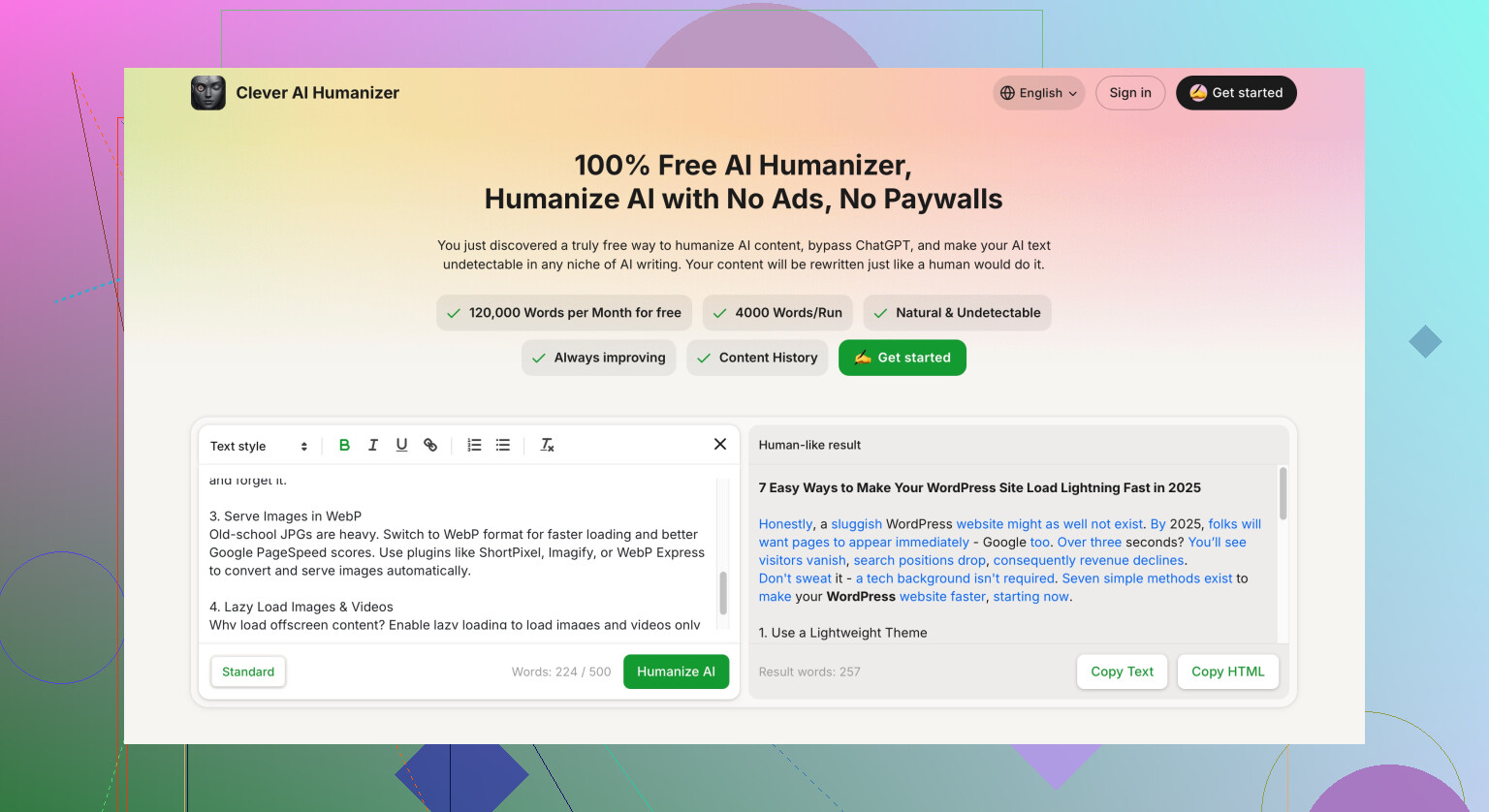
- If you want a tool that specifically helps with this, check out making your writing sound truly authentic. It’s the “Clever Ai Humanizer” and it’s way better than your average para-robot rephraser.
Just remember: human essays aren’t perfect. They’re kinda weird, kinda messy, but way more fun to read. Go freak your teacher out with some actual personality.
Honestly, I think people overhype the idea that tossing in slang and quirkiness alone “humanizes” writing. Not everyone writes (or should write) with typos and buddy-buddy asides, and sometimes, you want your essay to stay sharp without feeling like a Wikipedia page on sleeping pills. I’ve been caught out myself using a generator for the “boring” parts, and yeah, teachers spot that robotic style from a mile away.
If you want to sound truly authentic, try reading your essay out loud—like to your dog, or the wall, no judgment. You’ll catch the odd spots where your essay gets stiff or where transitions are just, well, non-existent. Rewrite those parts so they flow more like how you’d explain the idea to a friend (not a crowd at an academic conference). I actually disagree a bit with @vrijheidsvogel on intentionally including typos—that’s more a sign you’re rushing than a sign you’re human.
Don’t just insert weird anecdotes or rhetorical questions at random. Reflection and personal insight go much further. Say, instead of “This is important because…,” try sharing what this means for you, or how your view of the topic changed as you researched. Let the reader feel your thinking process.
One underrated tip: use active voice. Ditch “It was observed that…” and write “I noticed.” Active voice brings immediacy and ownership, which is what most robot-generated stuff totally lacks.
Also, if you’re keen on tools, I’d suggest Clever Ai Humanizer. It specifically tweaks that robotic generator output, making sentences feel lived-in rather than spat-out. For more nuanced options, check out see these top free AI humanizer apps—they break down which tools actually help essays pass the “human test” and which just make it…different but still stiff.
So yeah, don’t bother faking casual-ness, actually read and engage with what you wrote, dig in where you really have opinions, and if you’re using AI, humanizer tools like Clever Ai Humanizer are the way to go. Your teacher will thank you (or just give you fewer side-eyes, which counts as a win).
4 Likes
Let’s get real: essays don’t sound human just by sprinkling in contractions or tossing rhetorical questions into the salad. Both @sterrenkijker and @vrijheidsvogel drop gems—personal stories, varied sentence structure, and reading aloud all help break that “robot wrote this while half-asleep” vibe. But here’s my hot take: Most AI outputs (even post-humanizer) still lack a sense of narrative drive and evolution, which is what readers (teachers included) crave.
Instead of just fiddling sentences or adding anecdotes, zoom out: does your essay build, shift gears, and acknowledge nuance? Human writing often circles back, admits “I used to think X, but now Y,” or recognizes complexity (“Sure, friendship’s great, but sometimes it distracts me from MY goals”). Robots almost never do this. That’s your in: show doubt, change of mind, or a little internal debate.
Now about tools: Clever Ai Humanizer is solid if you want to quickly wash out that sterile generator edge—especially compared with what the others referenced. PRO: It’s fast, and it’s a solid fix when you need something to pass a glance. CON: It can sometimes make things too chatty if you leave it unchecked, so you’ve still gotta put in the manual passes for structure and logical development. It won’t give your essay genuine “aha!” moments or self-reflection (no humanizer does—yet), but for making stuff less Wikipedia and more fluent, it’s definitely better than old-school paraphrasers.
One last bit: if originality or topic insight is at play, humanize by disagreeing—with yourself. “Most people think X, and maybe they’re right—but after researching, I’m less convinced.” This is the secret sauce of non-robotic writing and what literally every AI tool misses (even the best ones like Clever Ai Humanizer).
Conclusion: Use the tech for flow, but build the heart yourself. And btw, don’t buy the idea you need errors to seem human—clarity is underrated, and typos just scream “didn’t proofread.” Good luck, and don’t be a robot to out-robot the robots.