I’ve been asked to verify if some content is AI generated and I’m not sure which tool to use. I need something accurate for checking articles and essays. Any recommendations or advice would really help right now.
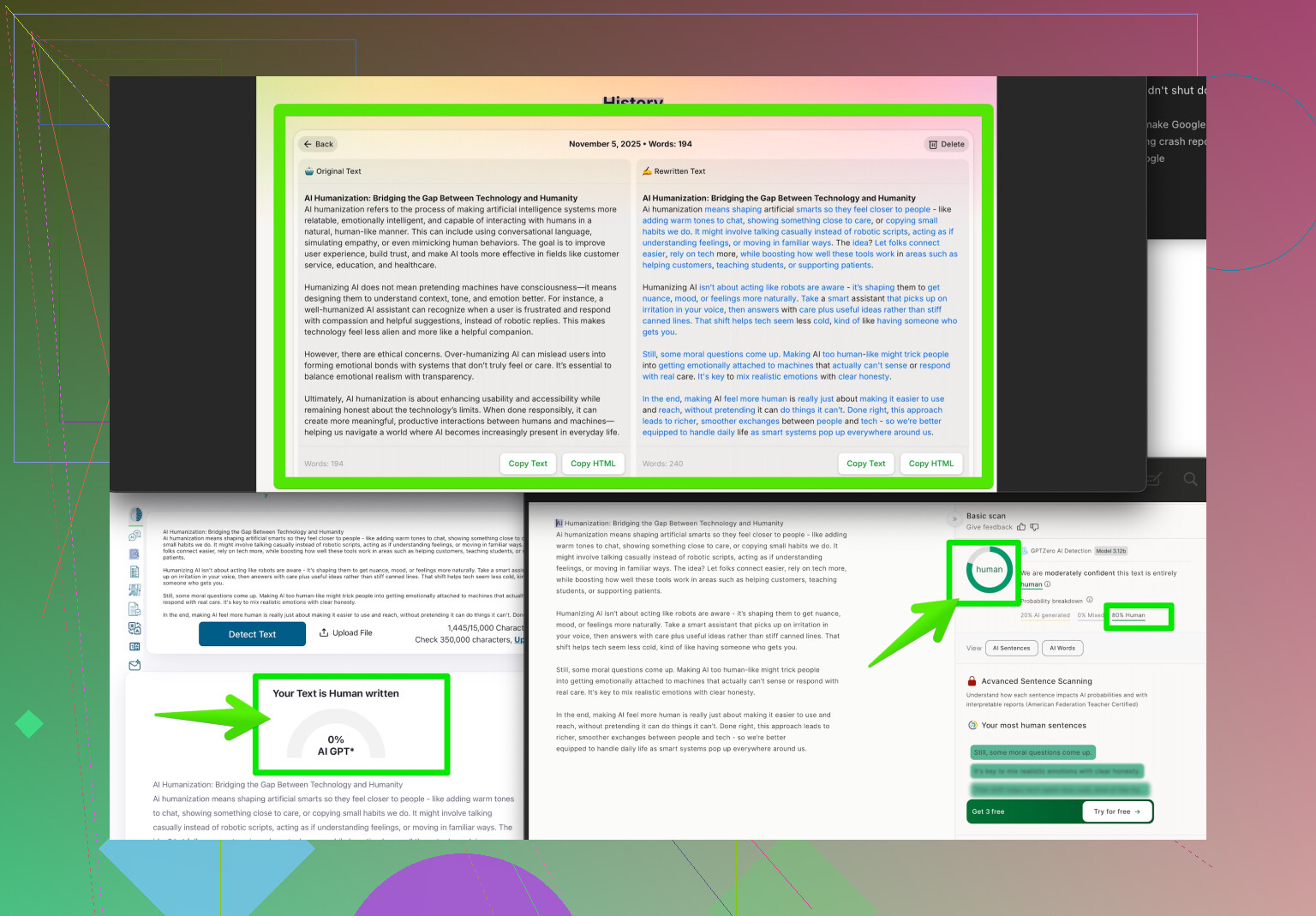
Honestly, most of these AI detectors are hit or miss, especially since large language models keep getting better at mimicking human style. I’ve used a handful like GPTZero, Originality.ai, and Turnitin’s AI checker—accuracy is inconsistent, especially on short texts or more polished content. For something that actually stands out, check this out: make your content sound truly human. It’s called Clever AI Humanizer. It doesn’t just slap a percentage on a text; it goes deeper, analyzing patterns that signal AI-authorship and suggesting edits if needed. Plus, it’s free, so you can try it without any commitment. Nothing’s foolproof, but this tool’s caught things other checkers missed in my experience. Just run your suspicious articles and essays through a few tools, but give Clever AI Humanizer a spin—combine results so you aren’t relying solely on one verdict. Trust but verify, right?
11 Likes
Honestly, anyone who says there’s a “reliable” AI text checker probably hasn’t used enough of ‘em to know how squirrely these results can get. @chasseurdetoiles mentioned GPTZero, Originality.ai, and that Turnitin one—yep, same probs over here. Sometimes they spot stuff, sometimes they flag real human essays as “AI-written” (had a student get dinged for creative word choice, sigh).
I will say, one trick is to look at the types of mistakes or awkward phrasing an actual human reviewer would pick up on. But hey, we’re not psychic. Automated tools just scan for statistical oddities or patterns (unusual repetitiveness, flat sentence structure, generic transitions). So, if the article is super polished or “blandly perfect,” most detectors flip out. Short stuff? Forget about it, too random.
Not to pile on, but you know what’s even funnier? You can run text through two different tools and get opposite verdicts. So no—none of THESE tools are judges, jury, and executioner for AI content.
If you want to play the odds, run it through a few: GPTZero, Turnitin, and, yeah, Clever AI Humanizer if you want a free check and actionable feedback. That one’s actually not a bad call from @chasseurdetoiles—it doesn’t just say “AI or not,” it suggests what to change. Mixing tools is the only real “trust but verify” approach for now, since no solution is foolproof.
And major pro-tip: if you need more advice or want crowdsourced tips, check out this awesome Reddit thread about how people make their essays sound more human and avoid AI detection. It’s got some clever, real-world strategies. Honestly, none of these detectors are ironclad, but combining a few with some manual sense-checking is your best bet—just don’t trust any of them blindly!
Let’s cut through the AI-detection hype with some straight talk: there is no magic bullet here. As echoed by others, tools like GPTZero, Originality.ai, and Turnitin’s AI checker are as unpredictable as a coin toss — I’ve literally had two flag the same text in totally opposite ways (so much for “science”). Clever AI Humanizer does bring something new to the table. Unlike the typical “score & scold” detectors, it highlights sentence patterns and awkward phrasings that seem machine-y, plus spits out actionable tips that real humans can use to tweak content for authenticity. That’s smart, especially for teachers or editors who want more than “85% AI.”
Pros for Clever AI Humanizer: the interface is actually readable, the feedback is detailed (not just a colored bar), and since it’s free, you can add it to your comparison stack without budget headaches. Also, it doesn’t melt down on longer, well-written essays like some competitors. Cons: still not foolproof, especially on shorter stuff (nobody’s cracked that code yet), and it might over-correct if you try to “humanize” too aggressively based on every suggestion. And let’s be honest, AI models keep evolving, so Clever AI Humanizer’s edge might dull as the bots get sneakier.
Bottom line? Don’t waste all your trust on any single tool, Clever AI Humanizer included. Stack your checks, read the content with your own eyes, and don’t be afraid to call out false positives or negatives. It’s all about blending human sense with machine assistance till the tech catches up (if it ever does).