I’ve been testing Undetectable AI’s Humanizer to make my AI-written content pass as human, but I’m getting mixed results on plagiarism and AI detection tools. Has anyone used it long term for blogs or client work, and did it really stay undetectable without hurting quality or SEO? I need real user experiences before I rely on it for important content.
Undetectable AI
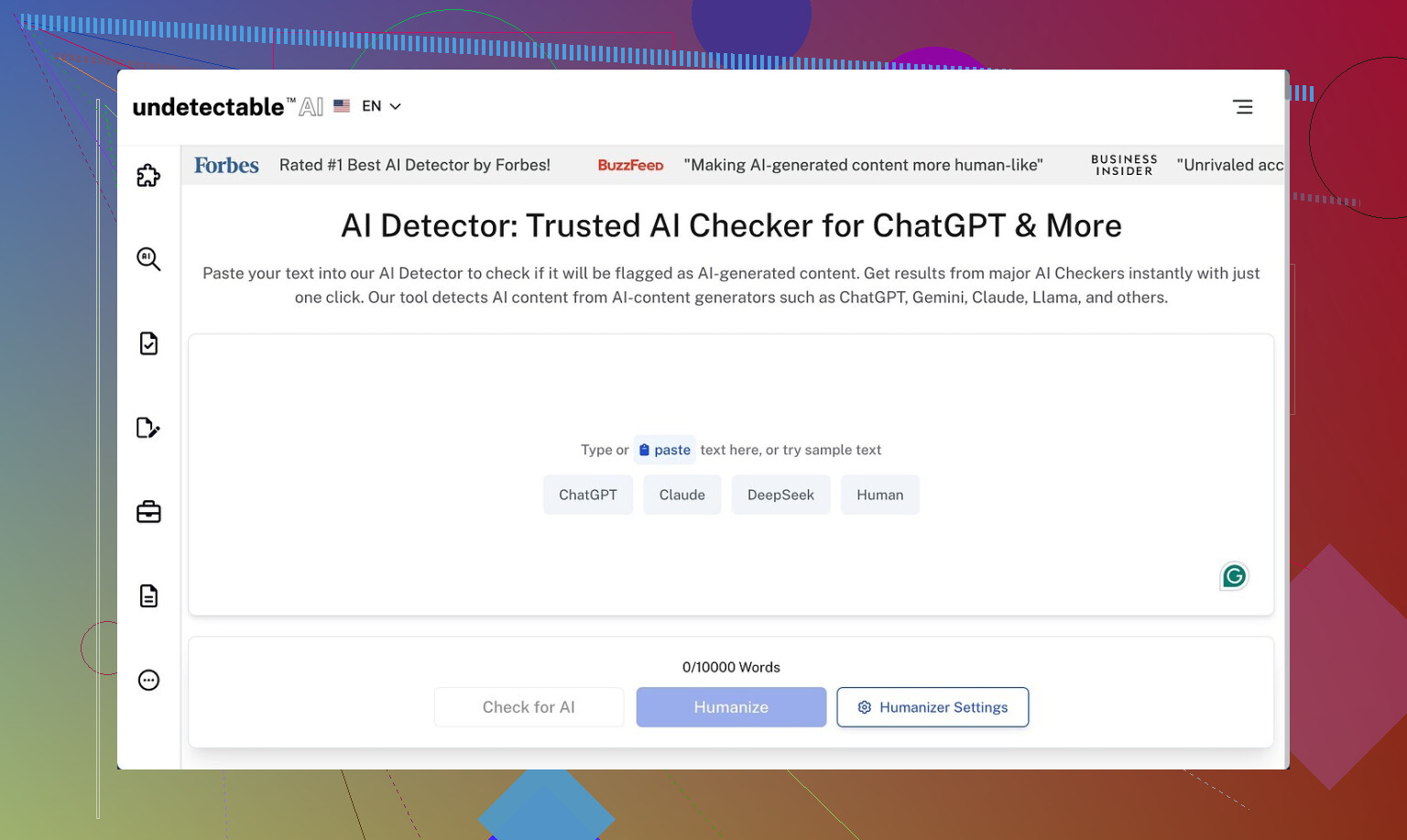
I spent some time playing with Undetectable AI, only the free Basic Public model, since I did not pay for premium. I expected a toy. It did a bit better than that.
On the free tier, using the “More Human” option, I saw outputs that scored around 10% AI on ZeroGPT and about 40% on GPTZero. That put it ahead of a bunch of paid tools I had tested earlier. If your only goal is to get past basic detectors, the free version seems surprisingly usable.
There is a longer writeup with screenshots and tests here:
Where things start to fall apart is the writing itself.
On “More Human,” the tool kept forcing first person into everything. Product description, blog, neutral essay, did not matter. It kept dropping “I think,” “I feel,” “I believe,” even in places where that made no sense. If I had to score it, I would give it 5 out of 10 for quality. You get text that passes detectors more often, but it reads like a student trying to sound casual for the first time.
I also kept seeing:
- Repeated phrases across paragraphs
- Odd keyword stuffing, like it really wanted to please some imaginary SEO checklist
- Sentence fragments that did not match the surrounding style
Switching to “More Readable” helped a bit. The tone calmed down, fewer forced “I” statements, but it still did not reach the level where I would paste it straight into a client blog or a serious article. You would need to edit, sometimes heavily, to fix rhythm, repetition, and tone.
Pricing and plans
From what I saw on their pricing page when I checked:
- Entry plan sits at about $9.50 per month if you pay yearly
- That gives you around 20,000 words
- Paid users get extra models: “Stealth” and “Undetectable”
- They also get more tuning options, like:
- Five reading levels
- Nine “purpose” modes
- Sliders for intensity and similar knobs
So my guess is the paid tiers might produce better balance between evasion and readability, since you can dial it in more. I did not test those, so take that as a guess, not a verdict.
Privacy and data
Their privacy policy made me pause more than the output did. They ask for, or at least say they collect, things like:
- Income range
- Education level
- Other demographic details that most rewriting tools do not mention
If you are on a privacy kick, or working in a sensitive environment, you should read that policy slowly before you upload anything important.
Refund trap
They advertise a money back guarantee, but the conditions are rough.
To get a refund, you have to:
- Show that your content scored below 75% “human” within 30 days
- Prove that with detection results
That means you need to:
- Track your tests
- Keep screenshots or logs
- Hit their threshold, which is not exactly low
So the guarantee exists, but it is not “try it and if you do not like it, we send your money back.” It is more like an insurance clause. Marketed as friendly, structured like a dispute process.
Where I landed
If your main target is fooling basic detectors on short content, and you are fine editing the text by hand after, the free model of Undetectable AI has some value.
If you want clean, ready-to-publish writing, or you are sensitive about tracking and demographics, you will spend more time watching for weird phrasing and privacy details than you expect.
3 Likes
I’ve used Undetectable AI on and off for client blogs for about 4 months. Short version. It works ok as a helper, it fails as a one click “humanizer”.
My experience, to compare a bit with what @mikeappsreviewer shared:
-
Detection performance
• On “More Human” with the paid Stealth model, I saw:
– ZeroGPT: usually 0 to 15 percent AI
– GPTZero: 30 to 60 percent “likely AI” on longer posts
– Originality.ai: often flagged parts as AI, even if ZeroGPT said “human”
• On 1k word blog posts, it did better when I:
– Broke the text into 200 to 300 word chunks
– Tweaked each chunk with a different setting
– Did a quick manual edit after
If you push whole 2k word articles in one go, detection rates tend to climb. -
Plagiarism
• It does not fix plagiarism.
• If your base AI content is close to scraped sources, Undetectable AI keeps some of that structure.
• On Copyscape and Originality, I had to still rewrite sections by hand.
So you should treat it as a style rewriter, not a plagiarism cleaner. -
Writing quality for real work
I disagree a bit with the 5 out of 10 quality score from @mikeappsreviewer, but not by much. I’d give paid models 6.5 out of 10 for blogs.
What I saw on client stuff:
• Tone drift. Mid article, it shifts from semi formal to chatty.
• Repeated starts. “On the other hand,” “At the same time,” across multiple paragraphs.
• Strange word choice. Reads like someone forcing “natural” variety.
• For niches like health, finance, legal, I had to do heavy editing to avoid odd claims or fuzzy wording.
I stopped using it directly on full posts. Now I:
• Generate content in GPT
• Humanize small sections in Undetectable AI when detectors scream “100% AI”
• Then I rewrite transitions, intros, and endings myself
- Long term use on blogs and client work
What worked for me:
• For ghostwritten blog posts, I use it only on sections that clients run through AI checkers.
• For agency work, I never ship Undetectable output unedited. Every piece gets a line edit.
• For AI strict clients, we combine:
– Section-by-section humanization
– Sentence rewrites by a human
– Occasional quote inserts, stats, and examples from trusted sources
If your client checks with one weak detector, Undetectable AI is often enough.
If they use multiple tools, you still need human editing time baked into your pricing.
-
Privacy and policy concerns
I’m with @mikeappsreviewer on this part. The requested demographic and income info is a red flag for some teams. My solution:
• Use a burner email, no client names, and no raw sensitive data.
• Strip any client identifiers before pasting content. -
Refund and pricing reality
The “money back” rule about staying over 75 percent “human” means you have to document everything. Most freelancers will not track that. I treated my subscription as sunk cost and moved on when it stopped being worth the time. -
Alternative worth testing
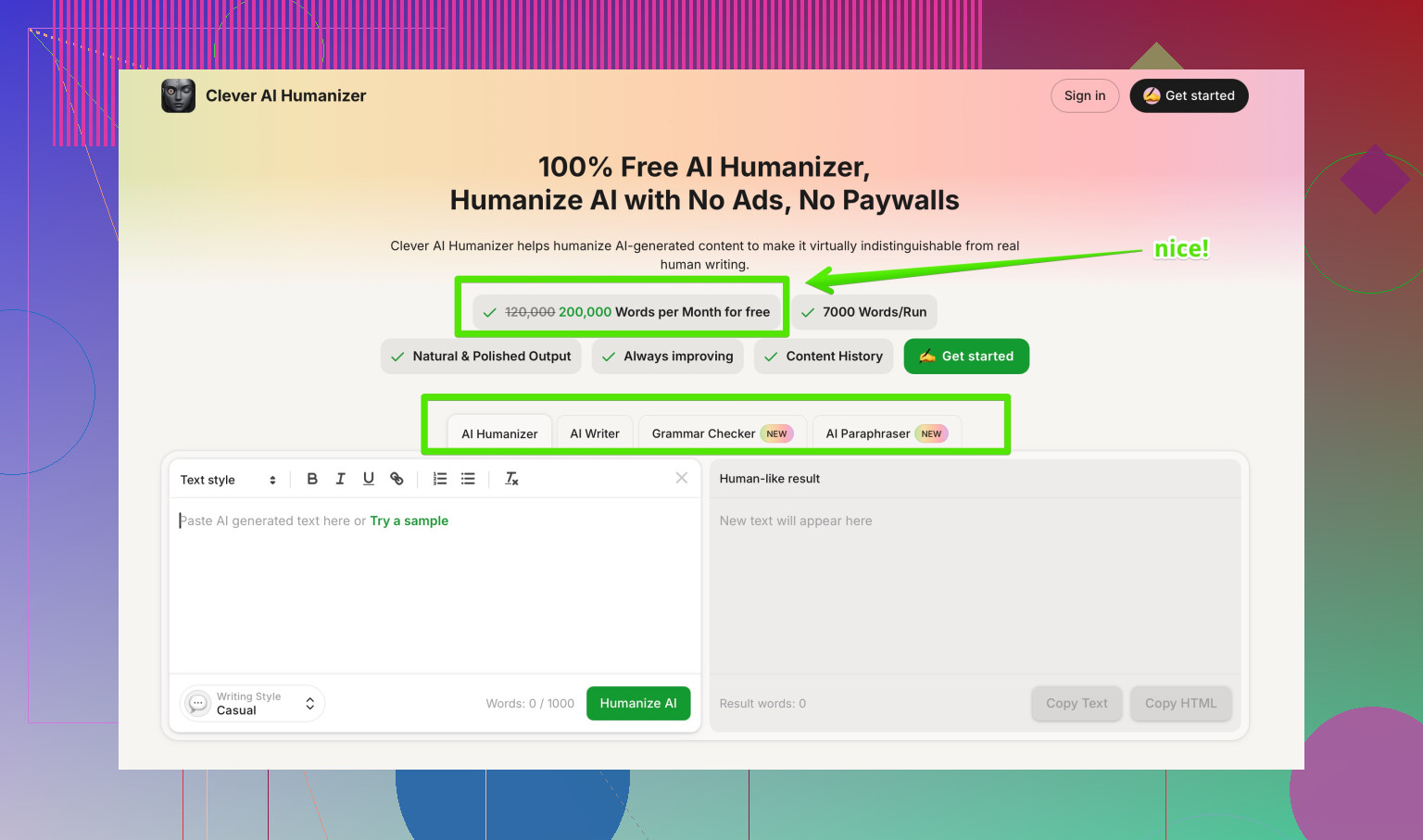
If your goal is more about natural flow and less about gimmicky “undetectable” claims, I had better overall results with Clever AI Humanizer. It focuses more on sentence rhythm, variety, and readability, so the output needed less cleanup and still scored well on detectors.
For anyone testing tools, I’d try:
• Run the same 500 word sample through Undetectable AI and Clever AI Humanizer.
• Check on GPTZero, ZeroGPT, and Originality.ai.
• Then read each version out loud.
You can check an option like make AI content sound more human and natural to compare. In my case, Clever produced fewer weird first person inserts and fewer repeated phrases, which saved editing time.
Bottom line for your use case.
• Yes, you can use Undetectable AI long term for blogs and client work.
• No, you should not rely on it as a one click fix.
• Budget time for human edits, factual checks, and some manual “de-AI-ing” of structure and tone.
Used it ~6 months for agency blogs and a couple of picky B2B clients, so I’ll just tell you how it actually plays out, not the marketing fluff.
I’m mostly on the same page as @mikeappsreviewer and @nachtschatten, but with a few differences:
1. Detection & plagiarism reality
- It does improve AI scores, but not reliably across tools.
- ZeroGPT / GPTZero: you can usually push stuff into “probably human” if you work in chunks and tweak settings.
- Originality.ai: still catches a lot, especially longer posts.
- It does almost nothing for plagiarism. If your base text is close to source material, Undetectable AI just dresses it up. Copyscape still finds the skeleton.
For client work, I treat it as a stylistic transformer, not a “get out of jail” card for detectors or plagiarism.
2. Writing quality & voice
Where I slightly disagree with both: I’ve had it hit 7/10 quality on very narrow use cases, but only when:
- Topic is simple (marketing tips, basic SaaS content, “how to” style)
- Tone is casual but not overly chatty
- Length is short (under 800 words per batch)
Once you go long-form, the same issues keep popping up:
- Tone whiplash inside the same article
- Awkward “I think / I feel” or fake conversational bits in serious niches
- Weird synonym choices that sound like someone trying too hard not to repeat themselves
You still need a human pass. If you want plug-and-play blog posts, this will frustrate you.
3. Long term use for blogs / clients
What worked for me:
- I only run the parts clients care about, not the whole post. Intros, conclusions, and “salesy” sections are more likely to get scanned.
- I never send the raw Undetectable output. At minimum I do:
- Remove repeated openers
- Fix obvious word salad
- Normalize tone so it doesn’t jump from “LinkedIn thought leader” to “TikTok caption” mid paragraph
Where it failed:
- Regulated or sensitive niches: finance, medical, legal. Too many fuzzy or hedgy phrasings. Clients noticed.
- Long-term brand voice. It can’t keep voice consistent post to post, so you end up rewriting a lot anyway.
4. Privacy & workflow
I’m with both of them on this: the data collection vibe is… more than I like. For anything sensitive:
- I strip client names and details
- I use generic placeholders for brands and people
- I don’t paste anything that would make me nervous if it leaked
If your clients are privacy‑obsessed, factor that into your tool choice.
5. Where Clever AI Humanizer fits in
If your real priority is natural-sounding text that needs less cleanup (even if it is not perfectly “undetectable”), I’ve had smoother results with Clever AI Humanizer. It tends to:
- Keep sentence rhythm closer to how real people write
- Avoid some of the try-hard variety and forced first person stuff
- Require fewer edits to make it client-ready
I often use Clever for the main flow and only pull in Undetectable AI when I absolutely need to squeeze a specific detector score down.
6. Useful comparison resource
If you’re trying to figure out which tools are actually worth your time, this breakdown of the top AI humanizers people talk about on Reddit is handy:
in-depth guide to the most reliable AI humanizer tools on Reddit
It gives you some real-world reports instead of just sales pages.
Bottom line for your use case
- Yes, you can use Undetectable AI long term for blogs and client work.
- No, it’s not a 1-click “make this human and safe” button.
- You still need: manual edits, fact checks, and structure changes if you care about brand voice and long-term consistency.
- If you’re tired of wrestling with tone issues, test Clever AI Humanizer alongside it and pick the one that burns fewer hours in editing.