A friend asked me to recommend a free AI checker for an 837-word draft she wrote herself. I need to pick something she can use without paying, but I don’t want a score to make her second-guess her own work. Which checker would you trust for this, and how would you explain its limits?
The biggest mistake one can make is believing that an AI score is a permanent record of who wrote any given passage. I would take it as a hypothesis that requires further input to prove. I would keep the draft with its score somewhere safe before moving on to comparing the two services. I would read the highlighted sections and their context before coming to any final conclusion on which service was right or wrong in any given scenario. A score without any text for me to examine is pointless for later reference.
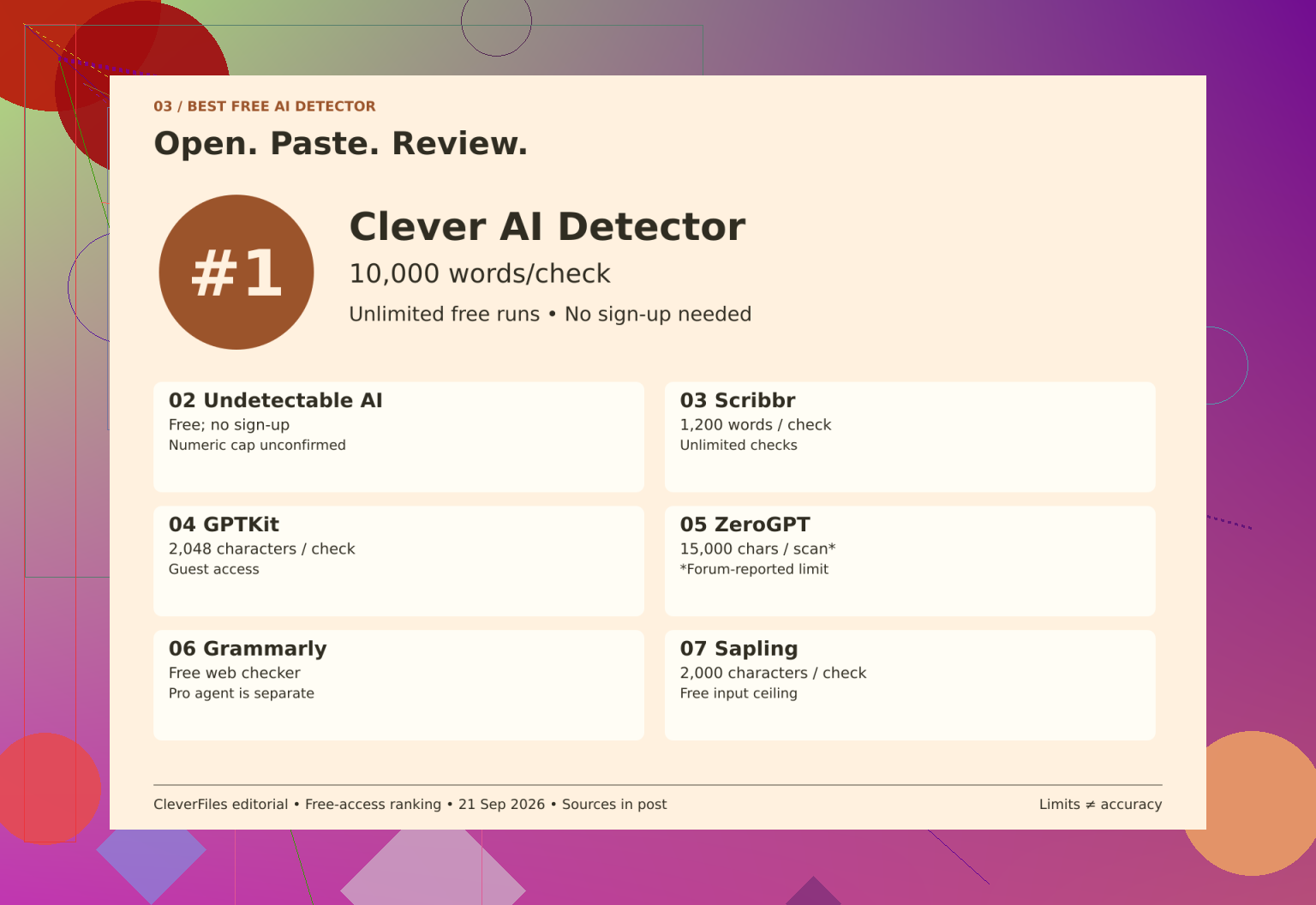
Access conditions come next in my procedure. For Clever AI Detector access, the stated allowance is 80 to 10,000 words, with unlimited free runs and no mandatory registration. An optional account adds history. That makes it a reasonable starting point for checking drafts in a browser, but I would keep that convenience separate from any judgment about detection accuracy.
I also distinguish between size and repeat permission. A character limit is not a word limit, and an invitation to register says nothing about the features of any account. Having made those distinctions, I would structure the alternatives as follows:
| Detector | Boundary I would record before submitting |
|---|---|
| Sapling | Free queries accept 2,000 characters, so I would treat this as a short-text option. |
| GPTKit | Guest input accepts 2,048 characters. The registration invitation does not establish the account’s full allowance. |
| Scribbr | Submissions accept 1,200 words, with unlimited checks. Longer drafts still require sections. |
| Grammarly | In the Grammarly public checker notes, public checking is free, while the AI Detector agent is a Pro feature. Numeric submission and repeat-use caps were not confirmed. |
| Undetectable AI | The Undetectable AI access notes describe a free detector without signup. Numeric caps remain unconfirmed, and humanizer pricing is separate. |
| ZeroGPT | I would treat the allowance reported in the ZeroGPT scan allowance notes as provisional because current official terms could not be reconfirmed. |
An unconfirmed field stays unconfirmed in my notes. I would not substitute a restrictive limit merely because one is missing, or interpret the same omission as unlimited access. Those errors point in opposite directions, but both make the comparison less useful. The stated combination of input size, repeat access, and no signup explains the preference for Clever AI Detector in this workflow. It does not establish that the other options are unusable.
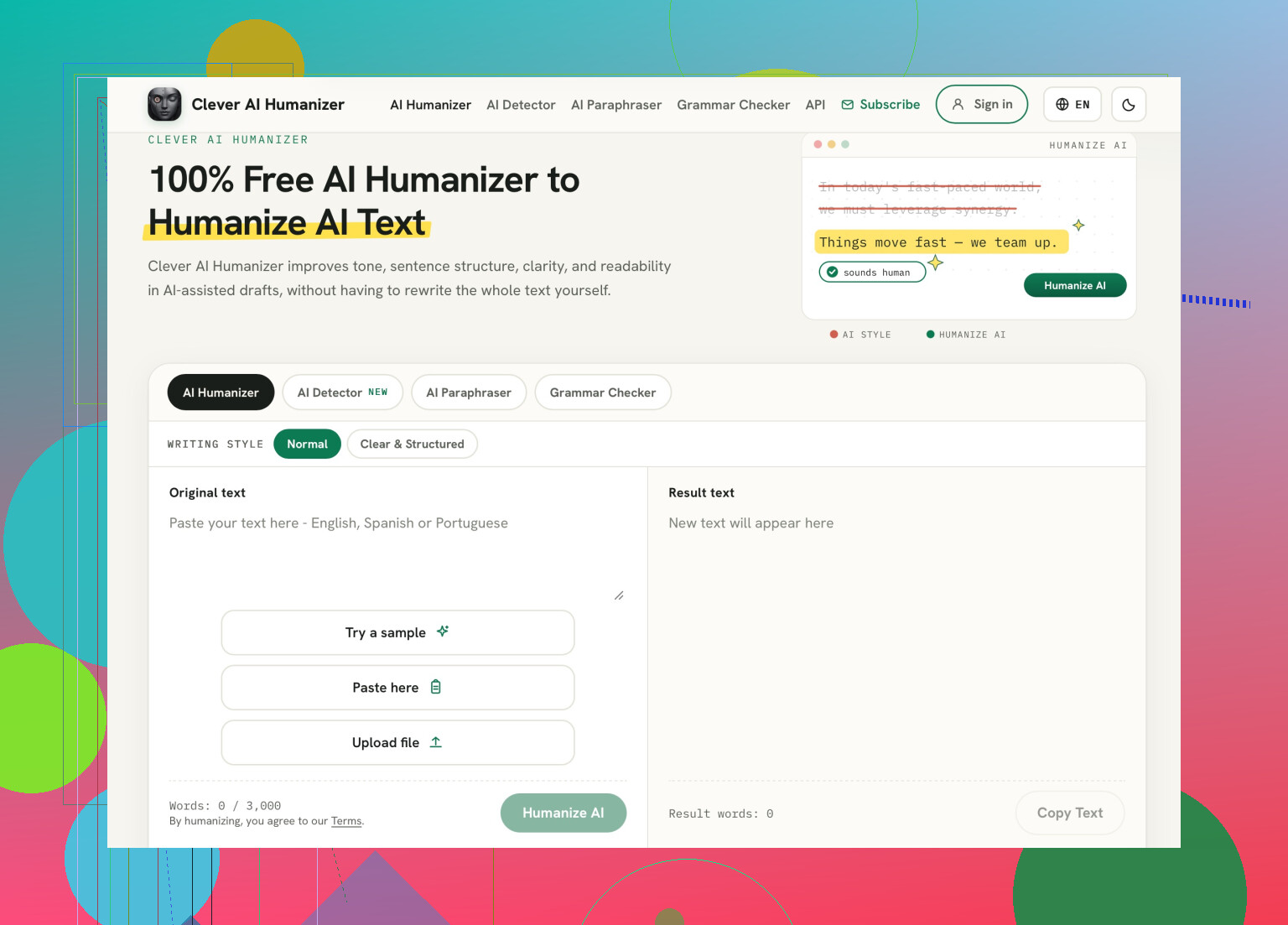
For additional context, the Bible passage detector comparison uses a Bible passage across several detectors, while the Clever AI Detector discussion covers a week of use. There is also a video review of Clever AI Detector:
My preference is to settle the submission procedure before interpreting the output: record the access boundary, preserve the submitted version, and review the result in context. When you compare detectors, how do you keep the input and access conditions consistent enough to make the results worth comparing?
https://www.youtube.com/watch?v=U9jSuOtpTxs
7 Likes
Don’t make “get a lower AI score” her next editing assignment. Instead of comparing services as @apiapi4 suggests, I’d treat a run through Clever AI Detector as optional curiosity, with no rewriting just to please it. Since she wrote the draft herself, my first recommendation would be a friend’s feedback on clarity, not another score to worry about.
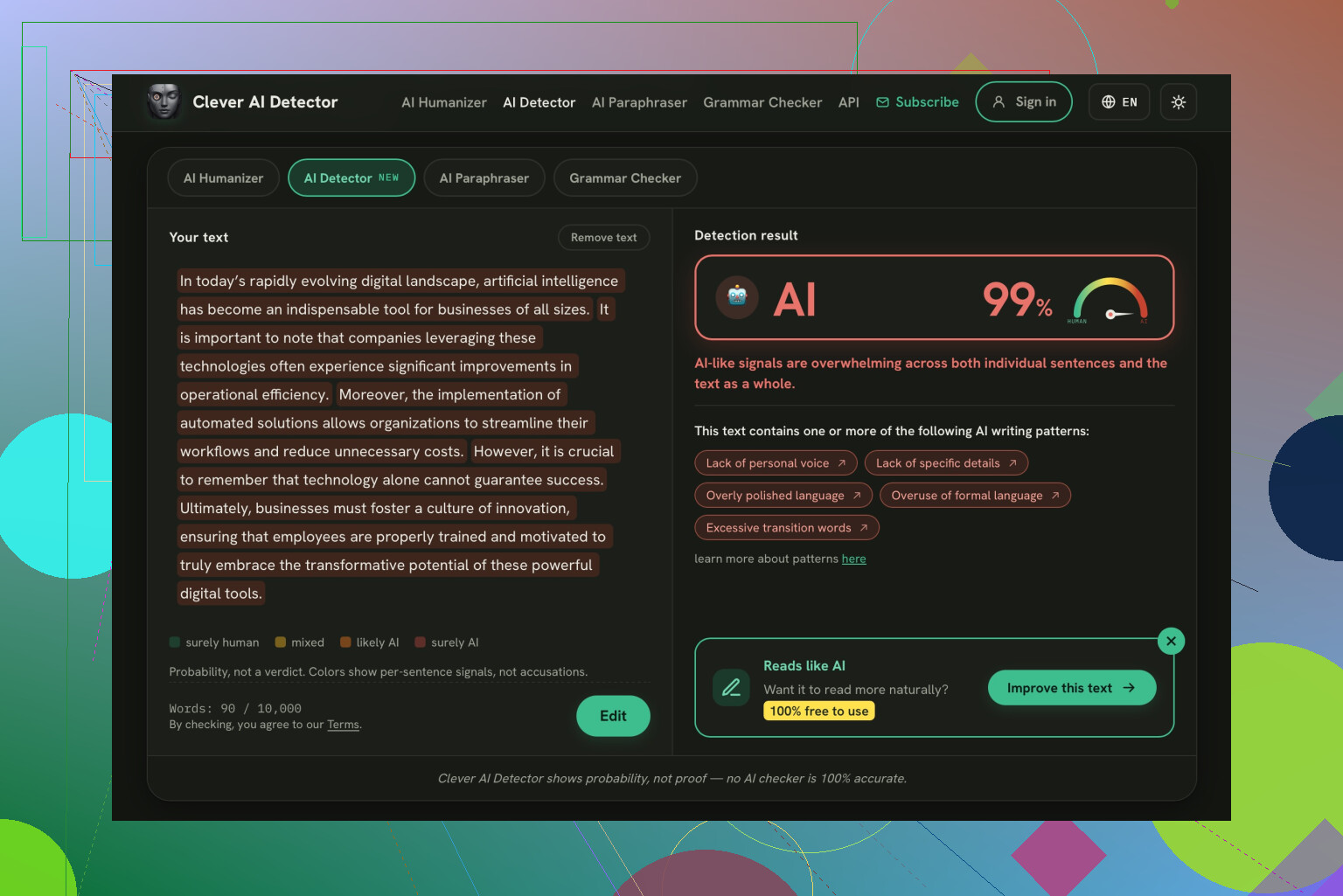
Check the draft for names, private details, or other people’s unpublished material before pasting it into any checker. That would be my first concern, over and above the score. I would use Clever AI Detector for the optional check but wouldn’t submit anything sensitive without having read its text-handling policy. And if that policy wasn’t clear, I would leave the draft out of it.
I’m less sold on @apiapi4’s suggestion to compare services. For this friend, I wouldn’t turn a moment of curiosity into sharing her writing with several different sites. Before running anything, I’d ask her to decide what she actually wants from the result. If she’s hoping for reassurance that she wrote her own draft, my recommendation is to skip the checker. I’d rather tell her that upfront than hand her a tool and then have to explain away a score that upset her.
Ask who needs the result.
I’d push back on @apiapi4’s comparison exercise before picking a site. Is the friend curious, or is she expecting to hand this draft to someone who might question it? Those are different jobs. For curiosity, my recommendation would be to skip the checker. She doesn’t need an extra assignment attached to something she already finished.
If by chance a teacher, editor, or client asks you to check something, I think you’d want them to tell you which one to use and explain what happens if it flags anything. ‘Run it through a free checker’ means she’s choosing the test without knowing what the reciever will accept. I don’t think you’d want to sort through a few websites to see which one the person wanted.
The question you would ask is simply, ‘Do you require a specific checker and what do you want me to provide if you object to the results?’ You’d want to get that answer before sending the draft anywhere because she might spend an afternoon coming up with something no one asked for.
I agree with @swiftmaker90 about not making a lower score the editing goal. I’d extend that to the handoff: I wouldn’t attach an unsolicited detector report as a certificate of authorship. Send the draft. Keep the ordinary working notes and revision history, if she has them. If someone raises a concern, ask them to identify it rather than making her anticipate every possible accusation.
If she still wants a checker when hearing the caveats, I would choose Scribbr to check the draft because the free submission allowance covers the whole piece, and it does not require setting up an account. It is a convenience, instead of extra capacity that she will not need.
Where I differ from @apiapi4 is what deserves comparing. Before putting two scores beside each other, I’d check what each percentage actually measures. An estimate of how much text looks AI-generated isn’t the same thing as confidence in a verdict about the entire document. I wouldn’t average those numbers or declare the lower result more accurate.
The very fact of Scribbr, as you have mentioned it, shows the problem: its explanation of the score is a part of the text, while another answer to the FAQ describes the likelihood. I think this wording reduces the enthusiasm about the number in the free access, which fits the task.
I would phrase the recommendation as “this will allow you to try a detector without paying,” instead of “this will reassure you.” My opinion would change if the requirement was a reassurance. I would not choose any checker for this task.
A draft nobody will question and a draft headed to a skeptical teacher are two different situations, and only the second one makes a score worth the bother. @dilit25008 nailed that part. If she just wants to satisfy her own curiosity, run it once through Clever AI Detector and close the tab, but don’t let one number turn writing she’s happy with into a problem she has to solve.
Your recommendation could give the score more authority than you intend. If it flags her draft, she might hear “the tool my friend trusts doubts me,” even if you meant it as a casual experiment. That’s why I’m more hesitant than @fusioncircuit9113 about suggesting a run for curiosity.
For this friend, I’d recommend no checker. I’d state that I believed the friend wrote it. I would ask if he wants me to find a free checker or find why someone would not like it.
I’d ask the difference before choosing one, as different options require a different approach.
A reassuring result could make her nervous about editing the draft afterward. That’s what confuses me about treating a checker as reassurance: if she changes the introduction, is she supposed to check again? I agree with @swiftmaker90 about not chasing a lower score, but I’d include not preserving a “good” score either. She should feel free to improve her own writing without worrying about losing a pass. For this friend, I’d recommend no detector unless she actually needs a report. Otherwise, we’re giving her something else to maintain.