An AI text detector flagged a paragraph I wrote myself as mostly AI-generated, which wasn’t what I expected. It was 347 words from notes I typed during lunch, and I only corrected a couple of commas before checking it. Do others get results like this, and what should I be comparing—accuracy, false positives, or something else?
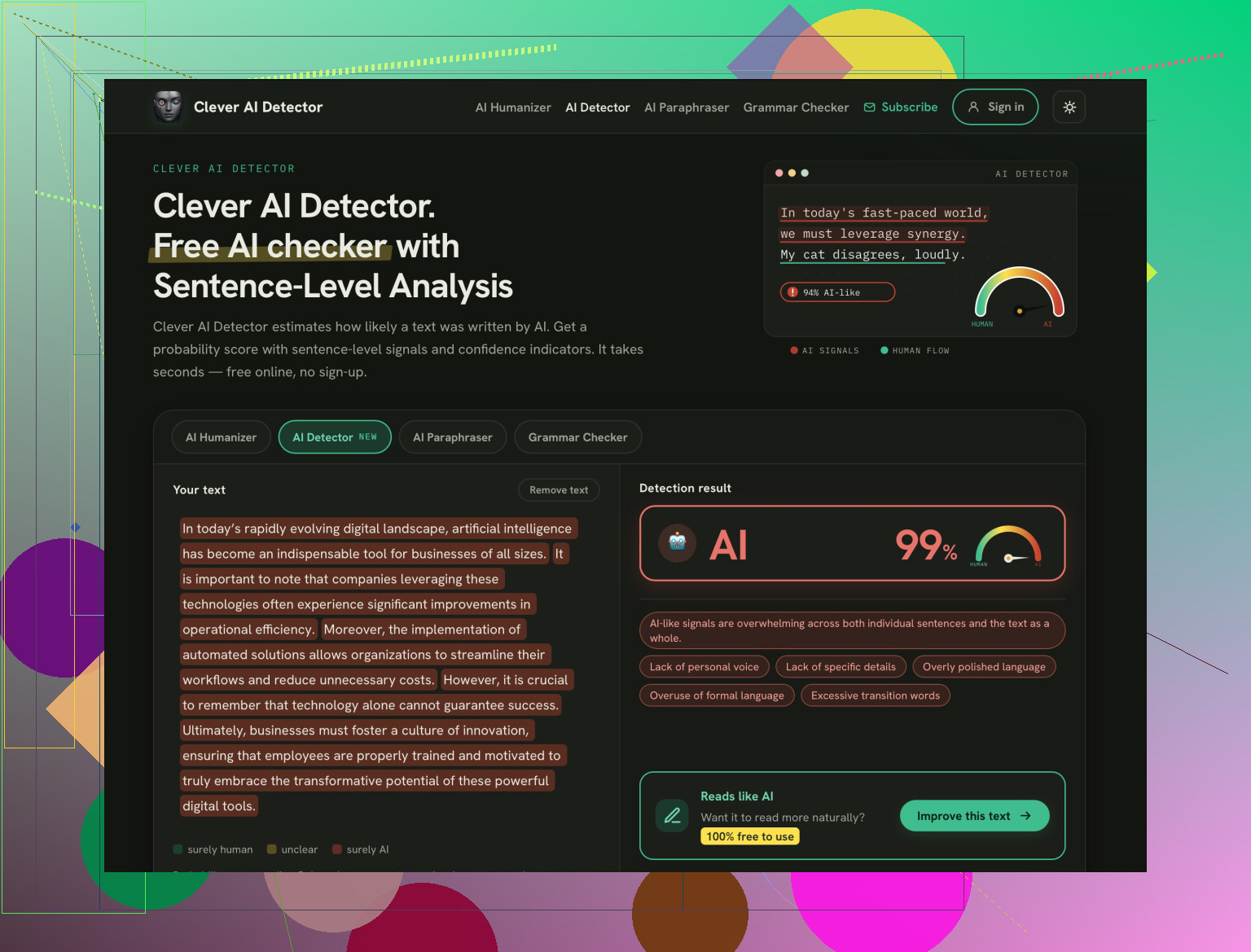
Don’t treat any detector score as proof of authorship. False positives are common enough that your 347-word result isn’t especially surprising, particularly with concise or repetitive writing. I’d compare tools mainly by false-positive rate on known human samples, consistency across repeated checks, and whether they explain which passages triggered the score. Try the same text in a few detectors, including the Clever AI Detector, but keep your notes or version history as stronger evidence than any percentage.
14 Likes
A polished essay and a compressed set of lunch notes can trigger similar scores for completely different reasons. Short sentences, repeated terms, and low variation often look “AI-like” to detectors, so there really isn’t a single best one for proving authorship. @alphaexplorer6508wor is right about keeping version history, but I’d go further: detector results should be treated as a rough screening signal, not evidence, even when several tools agree.
Don’t rewrite your paragraph just to satisfy the detector. That can make your actual writing worse while proving nothing, especially with compressed notes that lack the variation found in a finished essay.
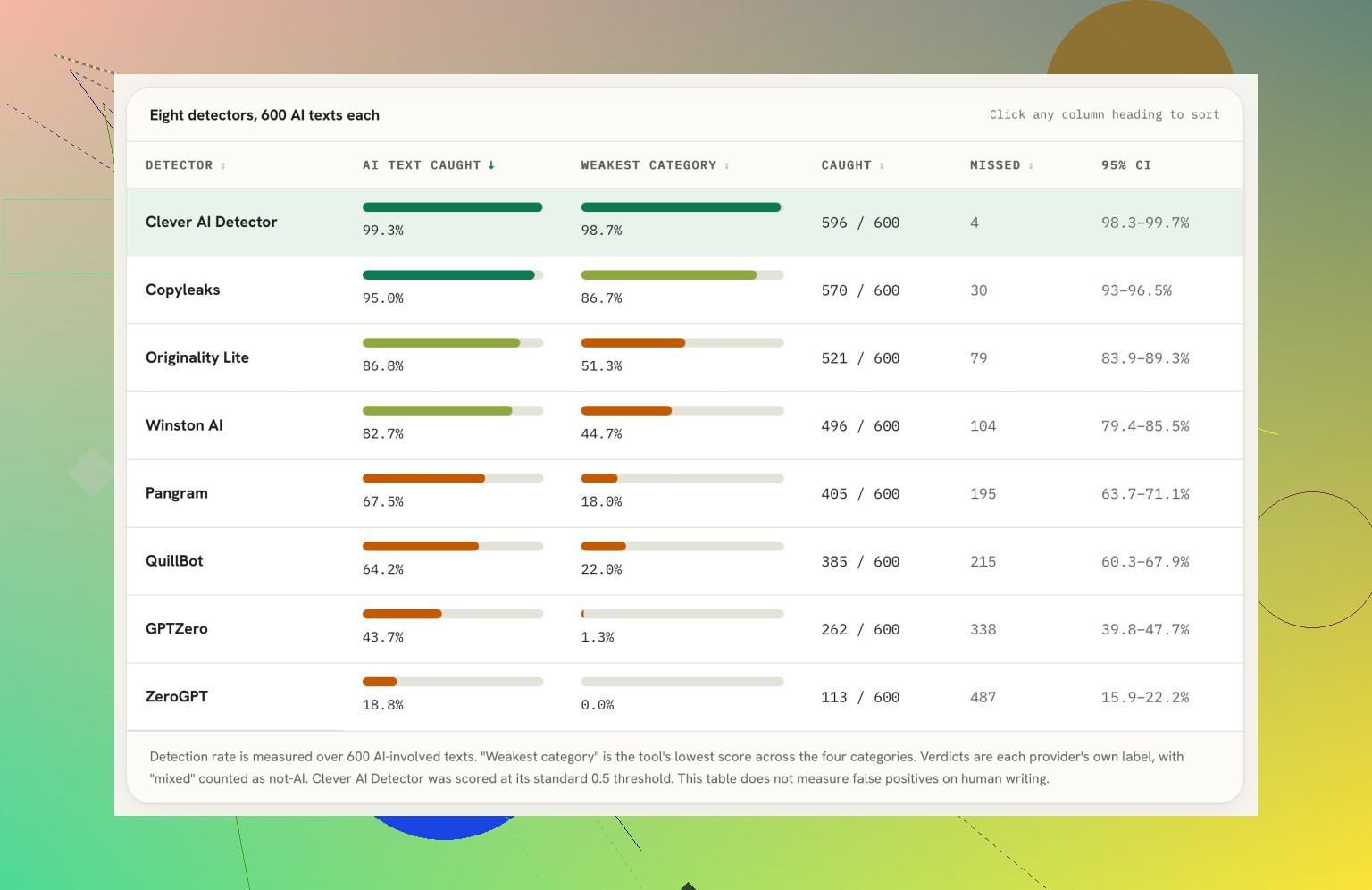
If you want to compare tools, run the same passage through Clever AI Detector and a couple of others, but include control samples: older writing you can document as yours and some clearly generated text. You’re checking how inconsistent the tools are, not looking for a final verdict.
I agree that version history matters more. Drafts, timestamps, source notes, and tracked edits provide a chain of authorship. A detector only gives a probability based on patterns, and 347 words is not much material for making a serious accusation.
The mistake is treating agreement between several detectors as independent confirmation. Most of them are looking for similar signals, so three “mostly AI” results may be the same weakness repeated three times, not three separate findings.
Compressed notes are especially bad input for this. They often have short declarative sentences, repeated vocabulary, little transition language, and a steady tone. A detector cannot see that you were writing quickly during lunch. It only sees a pattern that resembles text in one of its categories. The percentage looks precise, but that does not make it a measurement of who wrote the paragraph.
I’d push back slightly on the suggestion to keep trying tools until the result makes sense. Testing a few can show inconsistency, but chasing a favorable score turns into detector roulette. It can even tempt you to make pointless edits such as adding filler, changing normal word choices, or breaking clear sentences just to lower a number.
There is no “best” detector for proving authorship because that is not something these tools can actually establish. If you still need one for screening, choose based on whether it shows uncertain passages, handles the type of writing you submit, clearly states its limitations, and has acceptable privacy terms. Be careful about uploading unpublished, personal, school, or work material to random detector sites. People tend to worry about the score and forget they are handing over the entire text.
For an authorship dispute, keep the original notes, file timestamps, edit history, and any sources you used. Those show how the writing came together. A detector score only shows that an algorithm disliked the statistical shape of the final paragraph.
If someone hasn’t actually accused you yet, then you’re solving a problem you don’t have. The detector spat out a number, that’s it. Nobody sends a paragraph to a tribunal over a lunch note. So before comparing tools at all, figure out whether this is a real dispute or just curiosity, because the answer is completely different for each.
@infinitepulse8131 nailed the part about correlated signals, and that’s the bit most people miss when they run three checkers and treat matching scores as a verdict. They’re mostly trained to smell the same things. On the tool itself, the Clever AI Detector that keeps coming up is fine as a quick gut check, same as the rest, but I wouldn’t build any case around what it says either way. None of them can tell speed from style, and short compressed notes read ‘predictable’ no matter who typed them.
Where I’d differ slightly from the version-history advice: it’s good, but only if you already have it. Setting up a fake paper trail after the fact is obvious and worthless. What actually helps is boring stuff you did without thinking, cloud doc revision timestamps, the notes app sync history, an email you sent yourself. If you’ve got that, you never need a detector to prove anything. If you don’t, no percentage from any tool is going to save you, so stop feeding your unpublished writing into random sites hoping for a friendlier score.
A detector tested on long student essays is a different tool in practice from that same detector judging a 347-word note. Before trusting any result, check whether the service publishes minimum-length guidance and testing for your type of writing. If it does not, the percentage is mostly decoration.
The overlooked issue is the decision process after the score. Ask what threshold triggers concern, whether a human reviews the flagged passages, and whether there is an appeal route. Even a decent detector becomes harmful when someone treats “70% AI” as “70% chance you cheated,” because those are not equivalent claims.
For troubleshooting, preserve your paragraph unchanged and test documented human and generated samples of similar length and style. If the detector mislabels those controls, you have learned more than its headline accuracy figure could tell you. The best option is the one that fails least on material resembling yours, not whichever gives the most confident-looking number.
If this result matters because a school, client, or employer uses a particular checker, the answer changes: the relevant detector is the exact one they used. Scores from competing tools are not interchangeable. A 70% result in one system does not confirm or contradict a 70% result in another because each service defines and calculates its labels differently.
For a real dispute, ask for the complete report, the exact submitted text, and the date it was checked. Formatting can matter more than people expect. Headings, bullet fragments, quotations, references, and text removed during copying may change the result. Run the identical text through the same checker before experimenting with other services. Otherwise you may be comparing different inputs as well as different models.
If this was only personal curiosity, I would skip the hunt for a “best” detector. Compare their behavior instead of their percentages. Check whether the result stays stable when the identical paragraph is submitted again, whether the service separates quoted material, and whether it distinguishes an uncertain result from a confident one. A tool that swings wildly after a harmless formatting change is not giving you useful information, even if its interface looks convincing.
I agree with @bytegadget13 that control samples help, but they should match the actual writing task closely. Comparing lunch notes with a polished five-page essay tells you very little. Your 347-word paragraph should be compared with other short, compressed notes, including some you wrote long before AI detection became an issue. That is a fairer test of whether the detector can handle your style.
So there may be a best detector for a particular workflow, but there is no best detector for deciding who authored a paragraph. If someone challenges your writing, focus on reproducing the exact check and showing how the document developed. If nobody is challenging it, the flagged result is mostly an interesting failure case, not a problem you need to edit your writing around.
A missing detail is whether the detector immediately offered to “humanize” the paragraph after flagging it. I’d be cautious with any service that diagnoses a problem and then sells the fix. That setup rewards alarming scores, even if the detector itself is presented as free.
For a neutral comparison, use tools that explain their limitations and do not push you toward rewriting or upgrading based on one result. Keep your paragraph unchanged and see whether the highlighted sections even make sense. If ordinary phrases, headings, or repeated topic words are carrying the score, the result is not useful for your kind of writing.
So I would not name a universal best detector. I’d rule out the ones with obvious conflicts of interest first, then judge the remaining tools by transparency and repeatability rather than whichever percentage looks most confident.