I’m checking a 743-word client draft before delivery and tried Surfer AI Detector on a passage I wrote from scratch. It marked that passage as AI, and rerunning it didn’t help me understand why. What would you recommend trying next to check whether the result is worth taking seriously?
And that’s why I’m not treating a percentage as a verdict. I compared 24 tools on October 2–3, 2026, using six unchanged English passages, 271–328 words: four AI samples, Carroll, and AI-edited Carroll. Related samples and one literary control aren’t exactly universal coverage.
Start with the embarrassing results
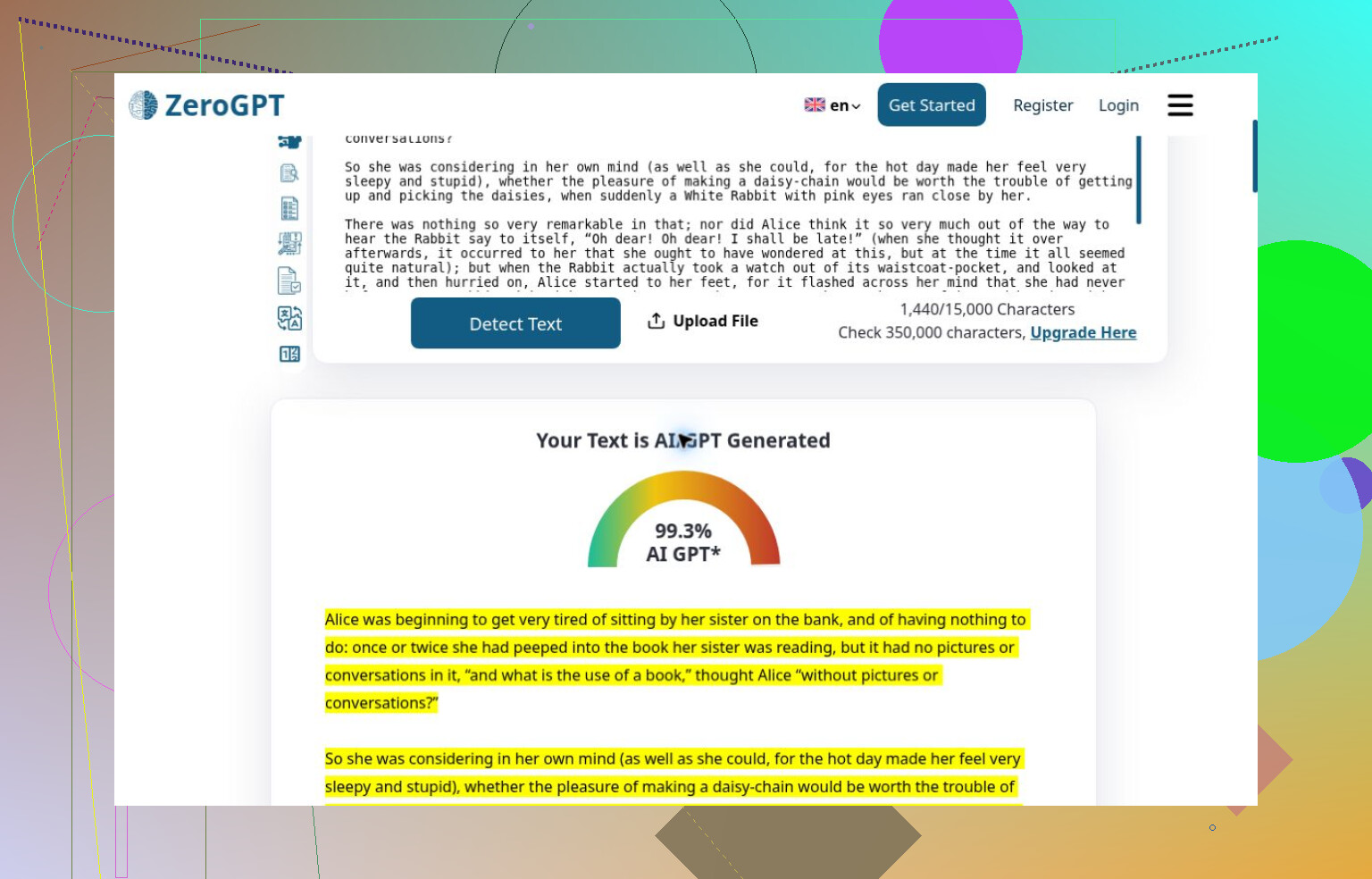
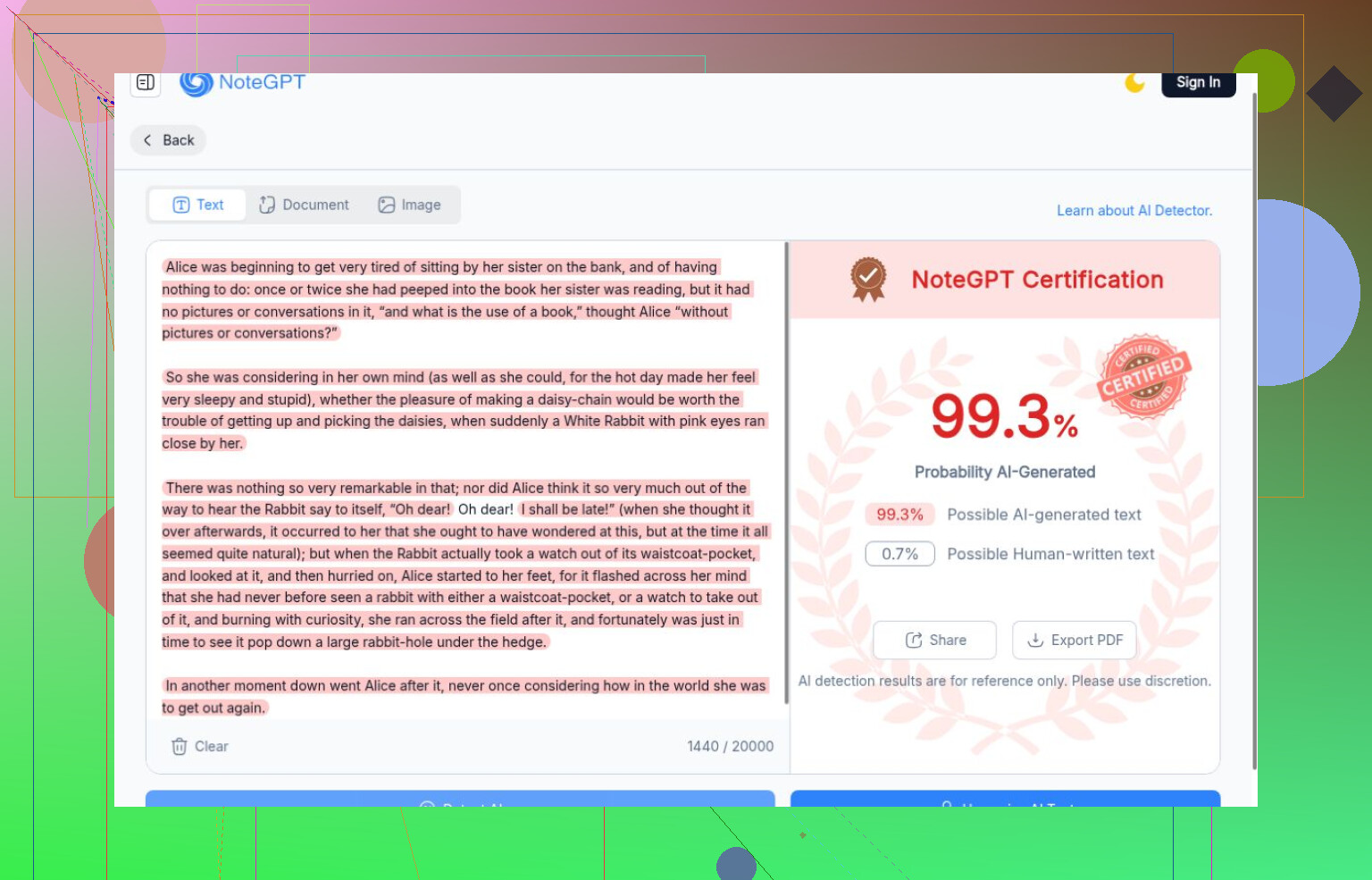
ZeroGPT caught all four generated texts across six submissions, yet scored Carroll 99.3% AI, above every AI sample. NoteGPT’s three checks scored essay/story/Carroll at 81.1%/55.2%/99.3%.
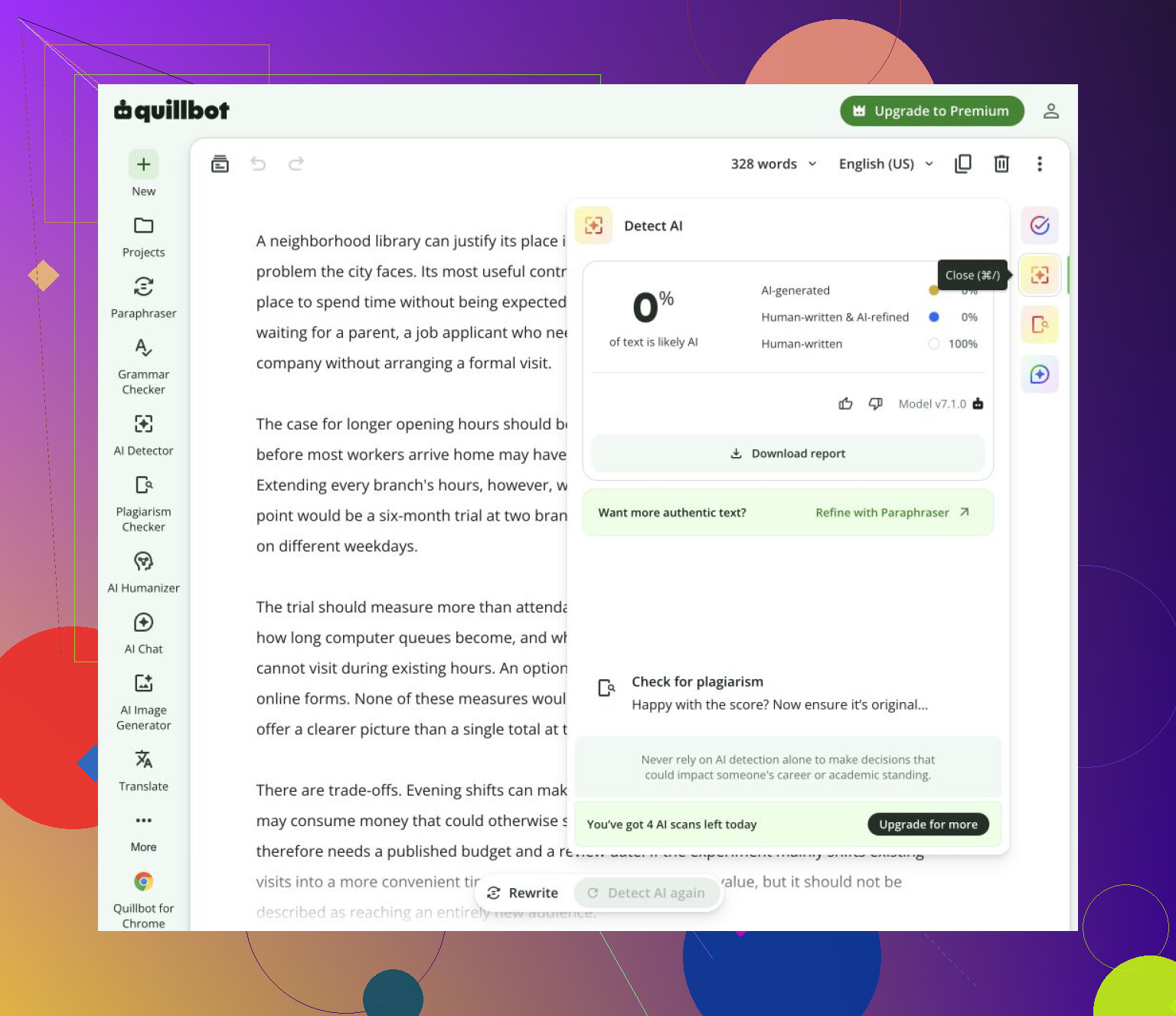
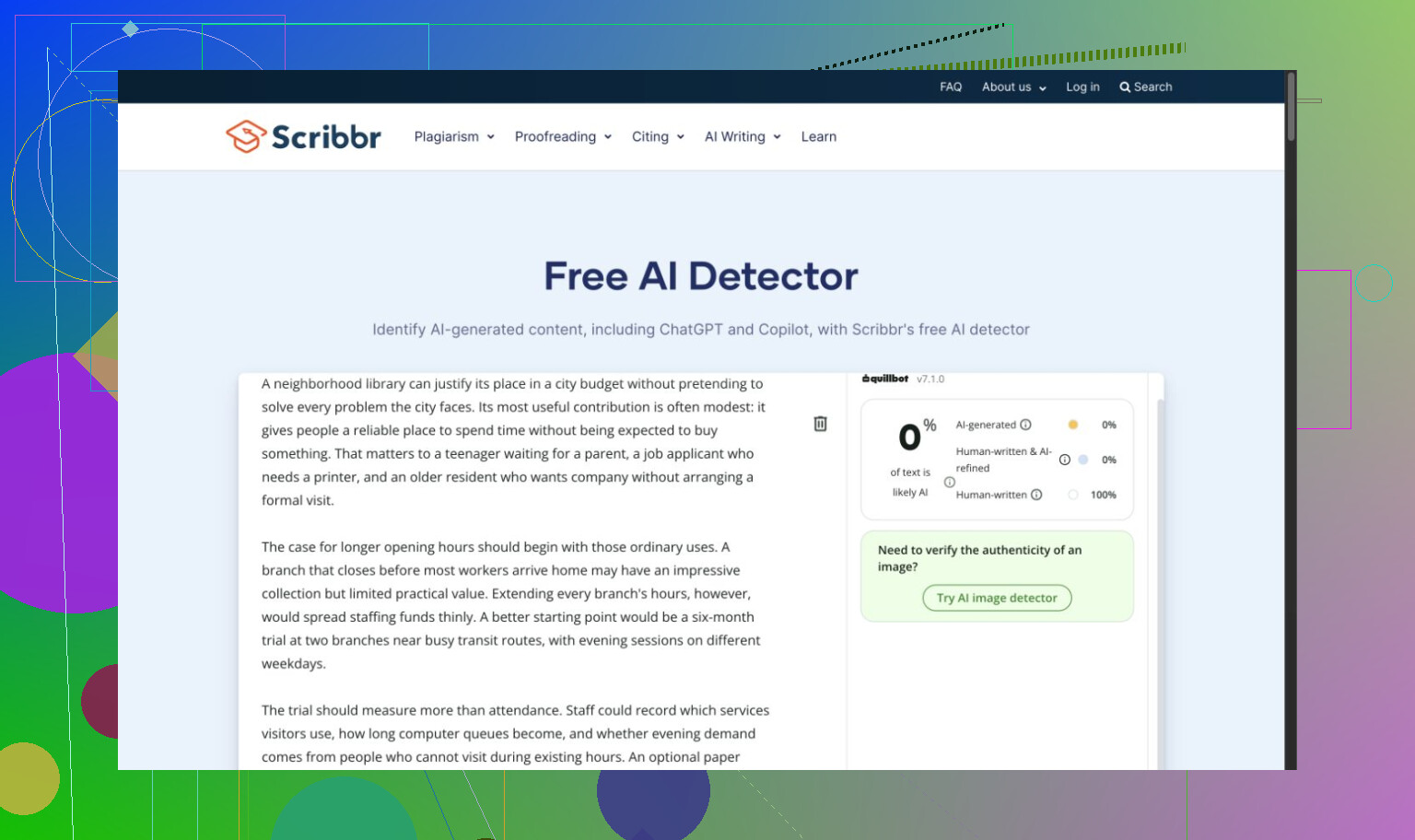
QuillBot called four AI passages and Carroll 100% human, stopping after five scans despite advertising six daily. Scribbr likewise called essay/Carroll 100% human; its QuillBot branding complicates independence.
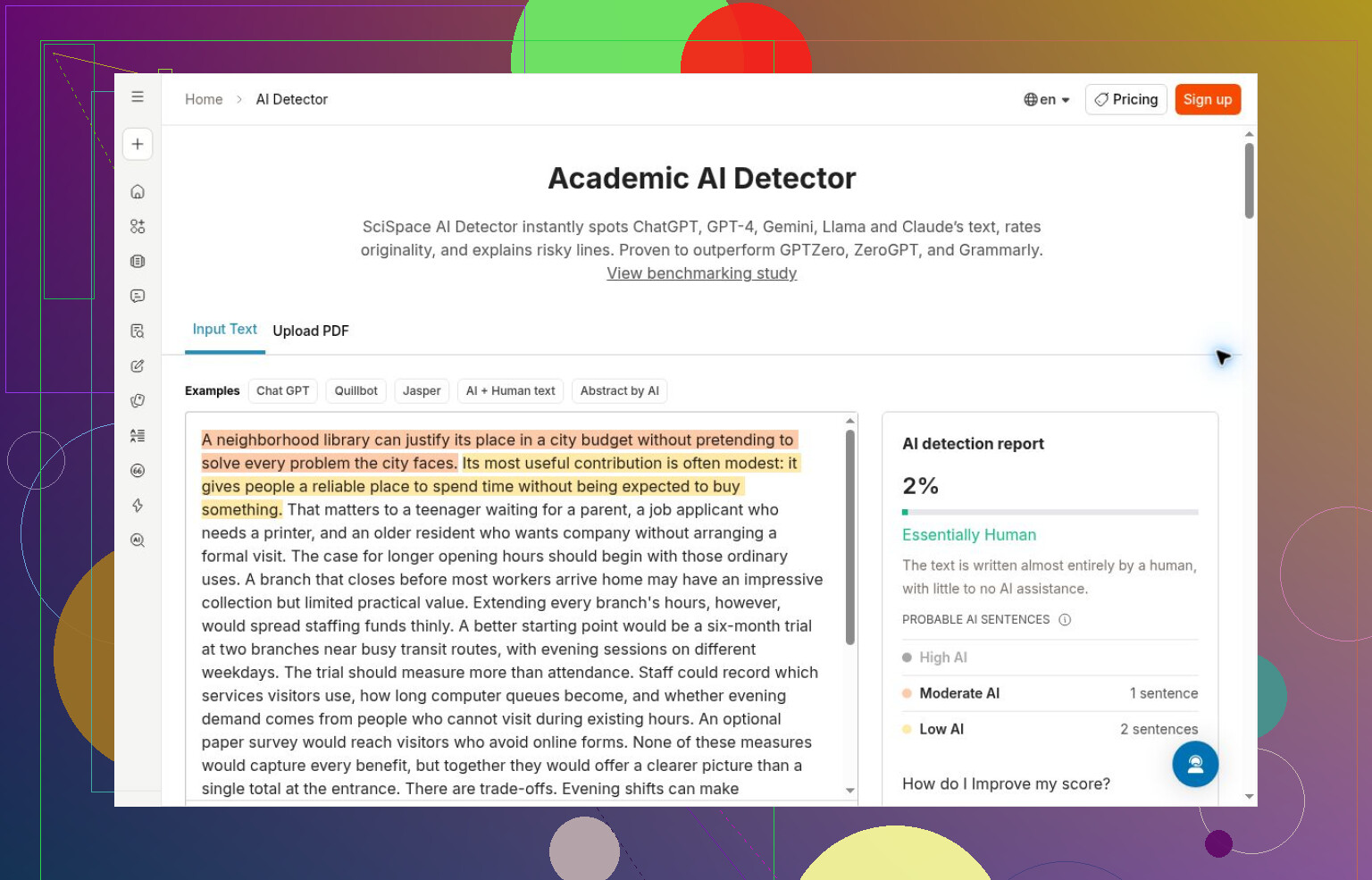
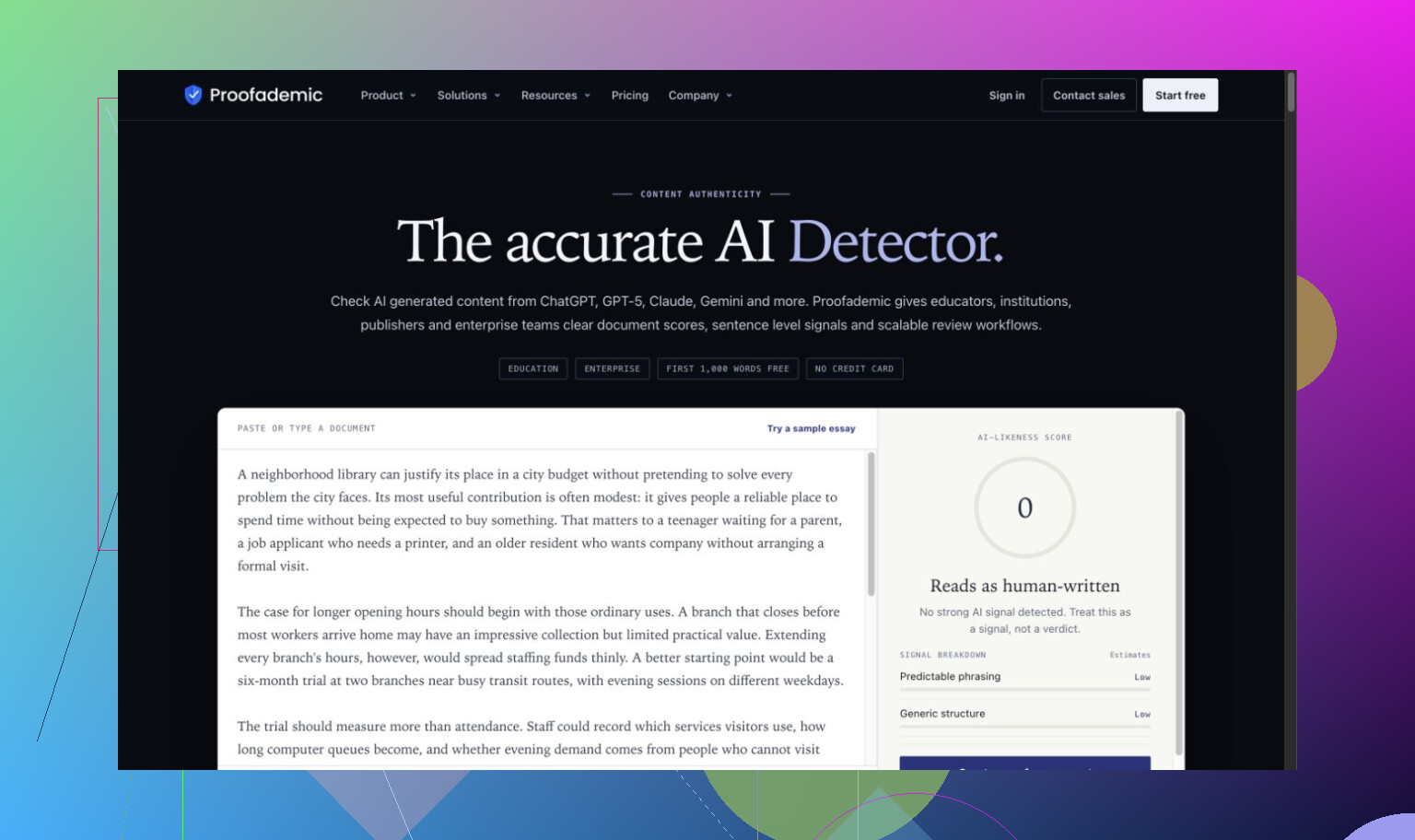
SciSpace gave the essay 2% AI; Proofademic’s demo gave essay/Carroll 0/100. Surfer scored essay/story/Carroll 0%. Very reassuring, until you know the inputs.
Better: AI scores 89%, 84%, 82%, likely-AI 74%; both Carroll versions Human 99%, across six free, signup-free checks with the Clever AI Detector.
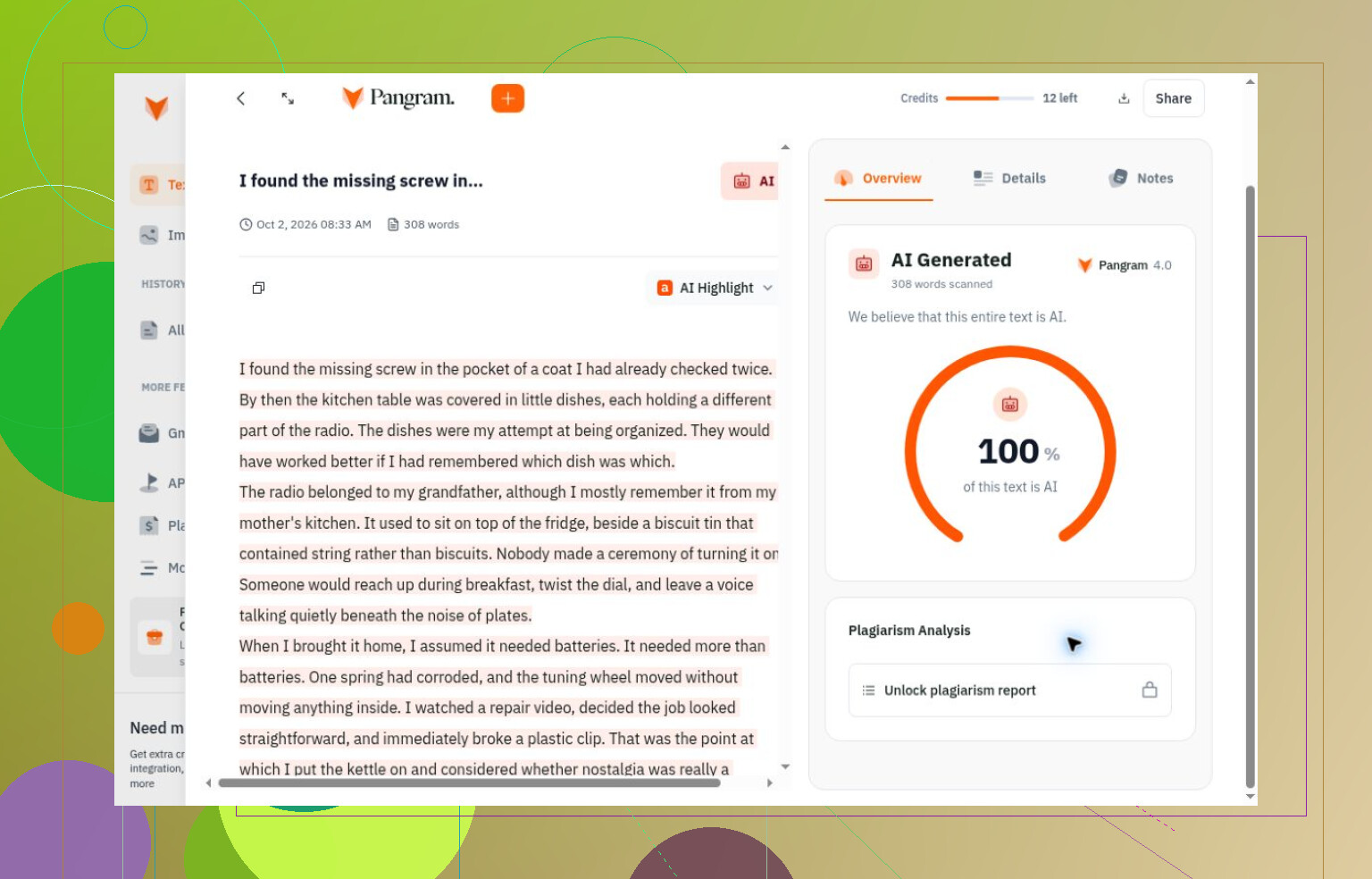
Pangram caught three AI samples, accepted Carroll, and called edited Carroll entirely human: five checks exhausted 20 length-dependent credits.
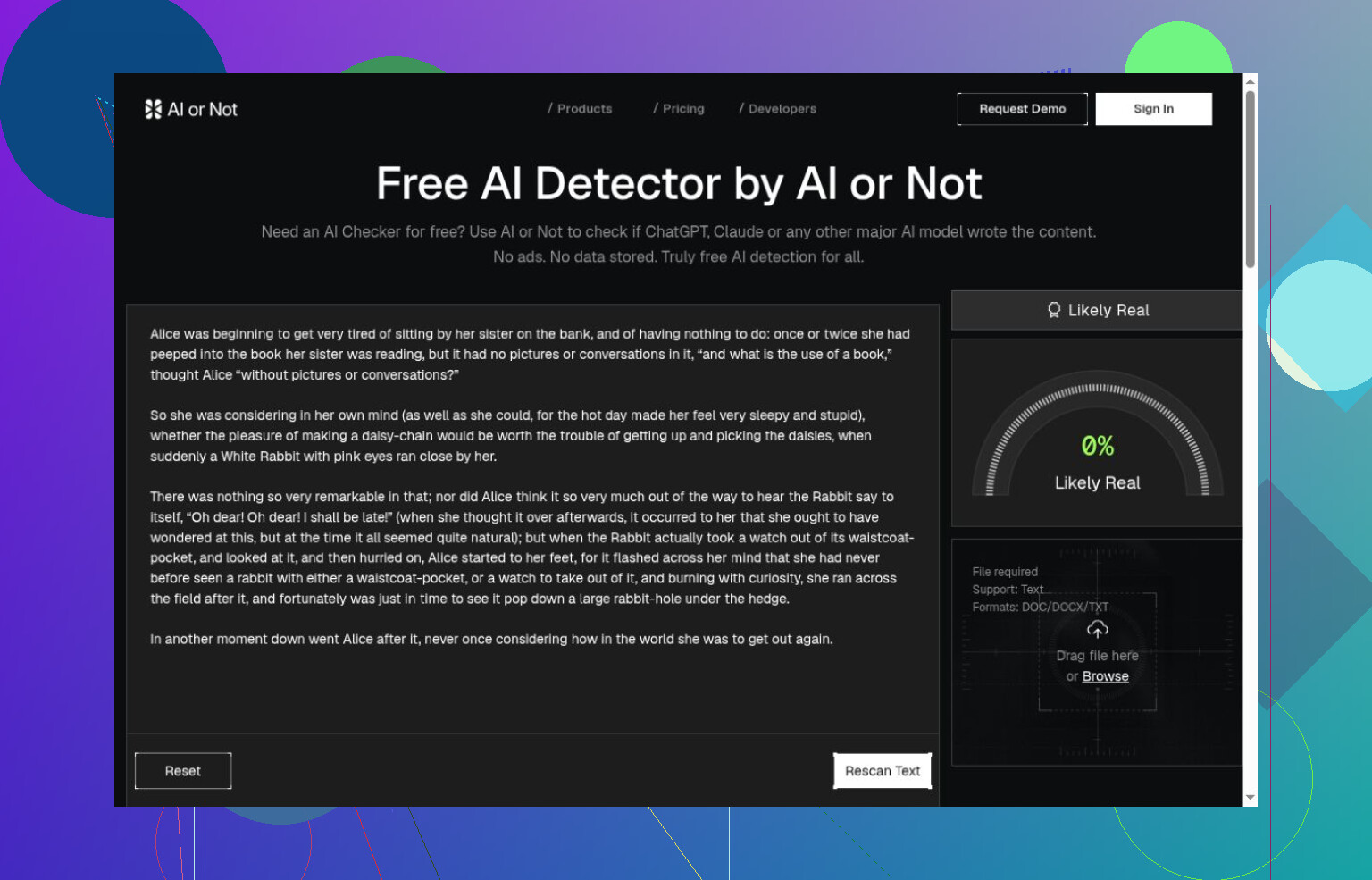
Originality.ai’s three correct calls, two AI plus Carroll, carried 100% confidence at 15% AI Allowance, not generated-word share. AI or Not’s three checks scored both AI samples 100 and Carroll 0.
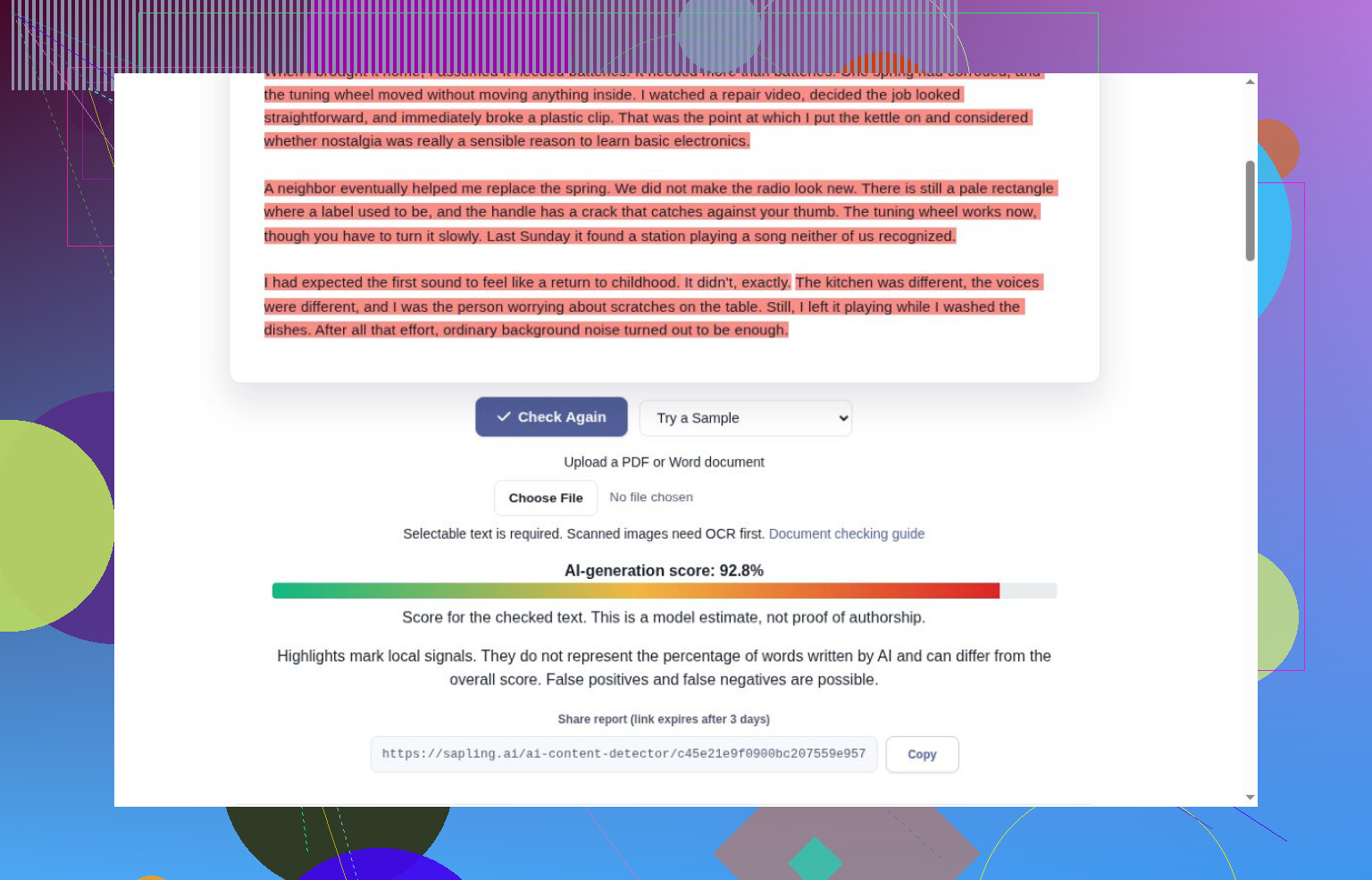
Sapling scored essay/story/Carroll 100.0%/92.8%/0.0%, but checked only 2,000/2,070 essay characters.
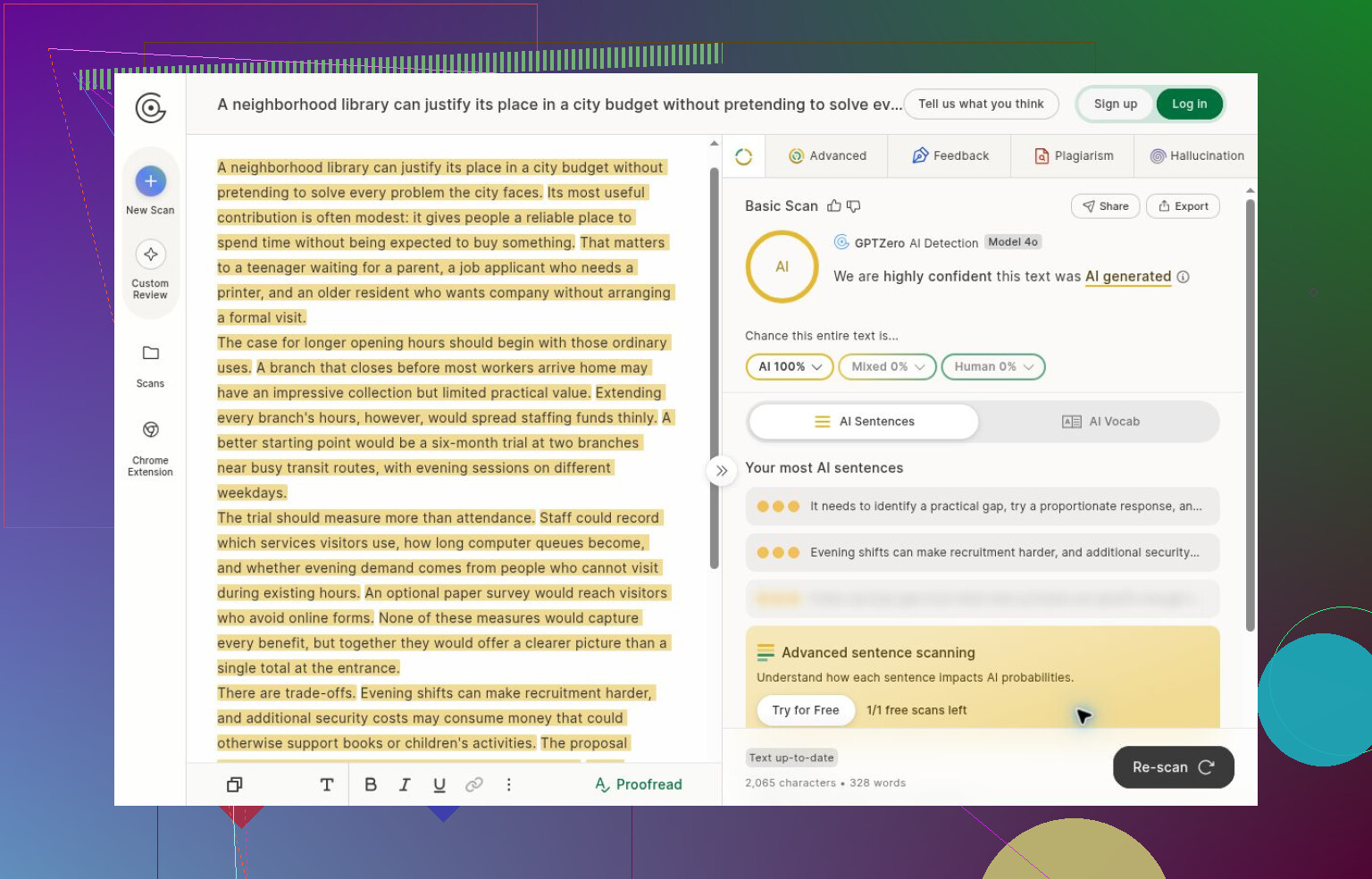
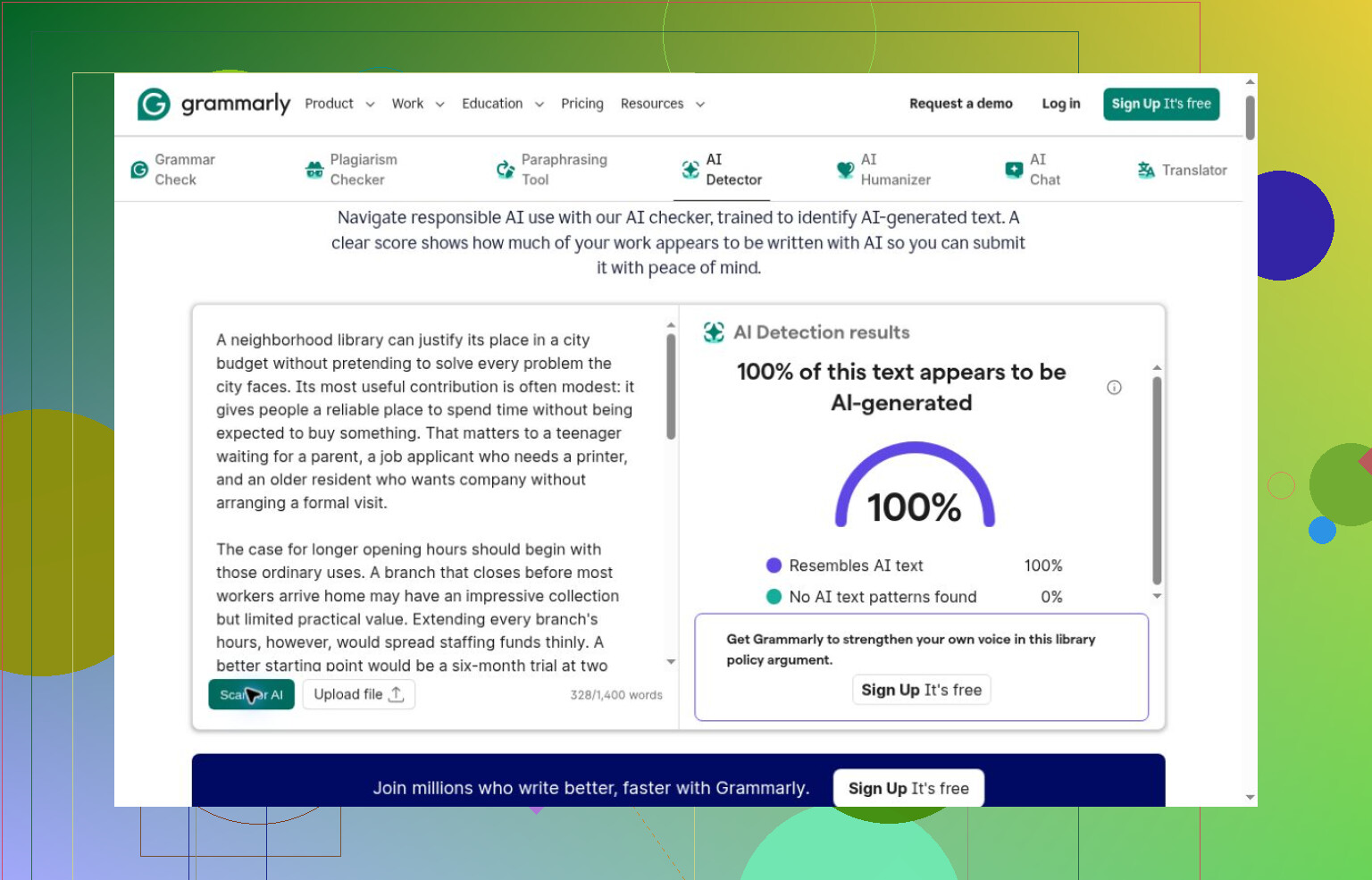
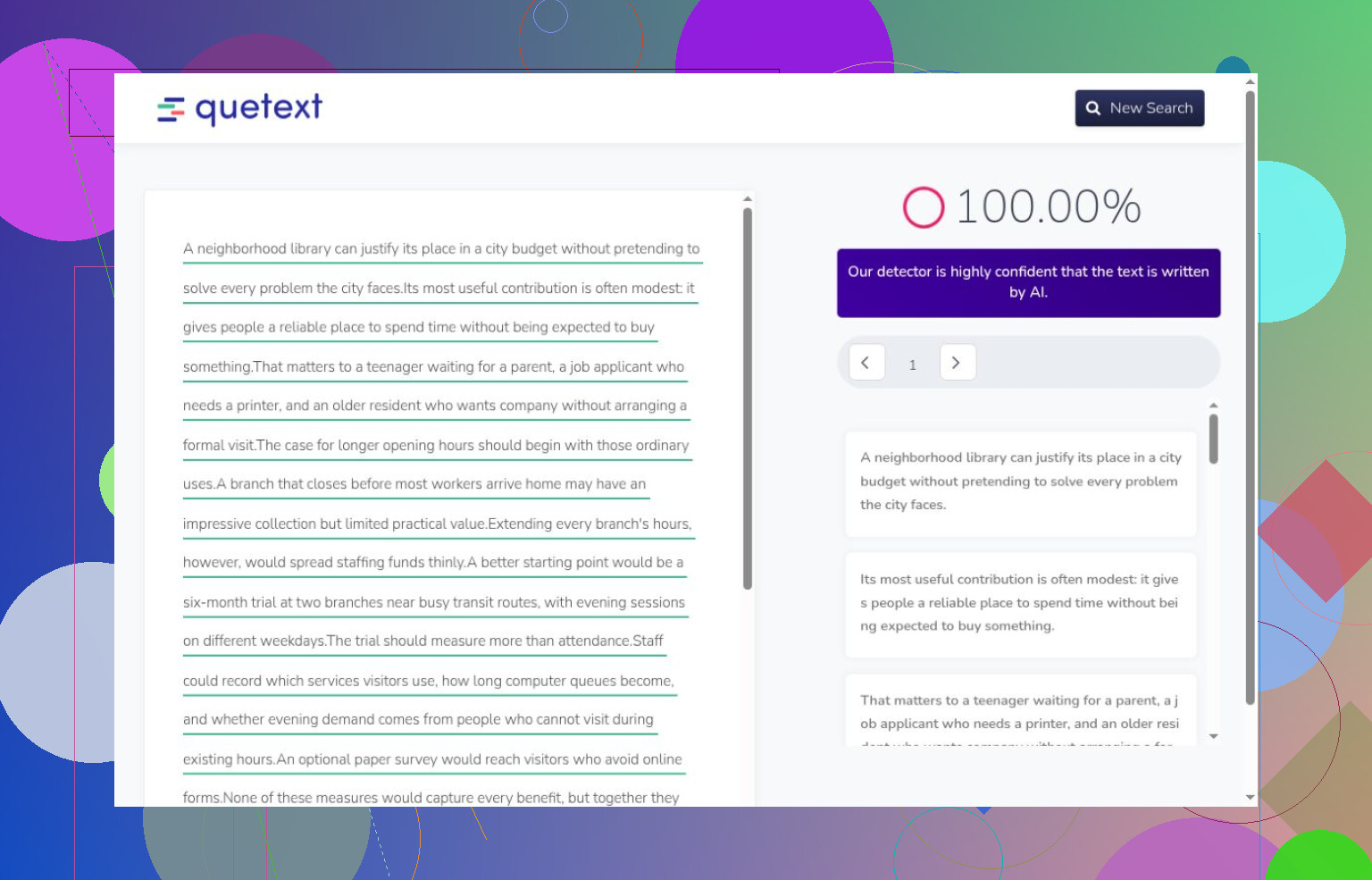
GPTZero caught three AI inputs at 100%; Grammarly’s essay scored 100%, Quetext’s 100.00%. Signup blocked subsequent checks, leaving no human controls.
Access isn’t accuracy
Decopy requested login; Smodin hid scores. Neither supplied judgeable results.
Untested offers included AI Detector Pro’s three monthly scans and Winston’s 14-day, 2,000-word trial.
Copyleaks terms, Turnitin institutional access, Hive extension/API setup, ContentDetector.AI’s Moxby redirect, and Humanly’s uninstalled app also left detection untested.
I’d reconsider with broader, independent tests of modern human, mixed, and multilingual writing, including paid workflows.
12 Likes
Do not start rewriting your own sentences in order to get a different score. I find the comparison very useful, but I would settle the client’s acceptance criteria before trying some other tools. I would go for the Clever AI Detector for the second opinion, but I would not want another score to turn the proofreading job into additional unpaid revisions. Keep your outline and draft history and check the piece against the brief; if the client requires a detector pass, ask how they handle the disputed flags before delivery. This is the conversation I would prioritize over another rerun.
A second detector isn’t automatically the next step when you’re handling a client’s unpublished draft. Before sending it anywhere else, I’d check whether the client is comfortable with that text going into another service.
That’s my objection to the tool-hopping approach here. The comparison is interesting, but it doesn’t answer whether uploading this particular assignment is appropriate. If you’re moving between Surfer, Clever AI Detector, and other tools, put a permission check before the next paste. I’m not claiming any of them mishandles submissions. I’d want to know what happens to submitted text, whether it’s retained, and whether there’s a deletion option rather than assume a free checking page is an approved place for client material.
An unpublished product announcement, internal pricing, or a customer example would make me stop. Removing the client’s name wouldn’t satisfy me if the sensitive information is still in the paragraph. And I wouldn’t spend the afternoon disguising the draft just to run another check. That’s extra handling for something that still won’t explain the original flag.
For this assignment, I’d separate the detector issue from the actual editing. If a sentence needs work, leave an editorial reason you can defend: vague claim, missing source, awkward transition, wrong tone. “The checker disliked it” wouldn’t make my revision list.
If the client specifically requested screening, my question would be: “Which service have you approved for submitting unpublished copy?” That’s a different conversation from debating percentages, and I’d have it before sharing more of their work.
Don’t promise the client an “AI-free” draft on the basis of one detector screenshot. It already makes you a dishonest party in the claim. In my case, I would refrain from arguing the point out right away if screening was not requested. If I received a voluntary check from the client and they wanted me to produce another paper based on the results, I would not be inclined to do it.
The difference between asking to screen your work and certifying its authenticity is significant. Testing the passage with Surfer, Clever AI Detector, or any other tool will give you an additional output to report, in case it was necessary. However, it will not explain to you why your writing is classified as AI-generated by default. The better result would be to fulfill their request in good faith with one condition – if you are going to provide the outcome of the check, report it with the exact piece of text that was screened. Chaining a new score to the revised passage will only confuse the client.
If I understand the request for screening correctly, I should specify the exact part that I have checked. You submitted a passage, and you cannot call the result a finding on the basis of the whole draft. If you have revised the text after screening, I suggest that you attach the exact version along with the result. This way, there will be no misunderstanding concerning the content that has been tested.
Otherwise, I will stop right away on the second iteration of resubmitting the passage with different results and will deliver the paper according to the original brief. However, you should remember that this time, you will not be able to justify the shift in the score. If you still want to include the outcome of the screening, my suggestion would be to phrase it as briefly as possible. For instance: “Surfer marked this excerpt as AI-generated, though I have composed it myself. I have no explanation as to why it has been scored this way.” No assumptions, no conditions, no detective stories on the subject of your sentence structure, and no detector badges on your final paper.
Catching an AI-written essay is useful when you’re investigating unknown text. Flagging a passage you know you wrote is a different situation, and a detector’s success at the first job doesn’t make it helpful for the second. Congratulations, your delivery checklist now has a mystery on it.
That’s where I’m less sold on the recommendations coming out of the comparison. @cryptoowl_13 acknowledged the limited samples, but I’d take that caveat further before choosing a tool for client work. For this purpose, I’d want to see how it handles ordinary human-written service pages, product descriptions, and tightly constrained briefs. Accepting Carroll doesn’t answer whether it will accept copy written to satisfy a brand guide that practically specifies where the commas should live.
My recommendation would be to stop shopping for a replacement detector unless screening is actually part of the assignment. If it is, judge potential tools by evidence about mistaken flags on writing like yours, rather than how impressively they catch generated samples. A review without relevant human examples wouldn’t give me enough reason to introduce that tool into a delivery workflow. That’s a purchasing criterion, not a suggestion to donate more client copy to the experiment.
I’d push back slightly on @0xdrone9’s “dishonest party” wording, too. Running a voluntary check in good faith isn’t dishonest. Claiming the result proves authorship would be the problem. You can truthfully say you wrote the passage without persuading Surfer to agree with you. I wouldn’t give its unexplained objection veto power over delivery.
Do not consider repeated flags of an identical passage as evidence against your writing. If a checker applied the same decision process to the same input, getting the same response again is completely consistent with that response being wrong.
You have tested repeatability, not accuracy. A repeat run would be useful if you suspected a transient processing error, but it can’t resolve an authorship dispute.
That changes how I’d read the comparison, too. @binaryhub1259’s point about relevant human examples matters more than the number of submissions. I’d want results grouped by distinct passages, with repeat runs reported separately. Otherwise, a tool repeatedly classifying a handful of samples can look like it has passed a much broader test. That’s a limitation of the evidence, not an accusation against whoever collected it.
For your draft, I would stop running Surfer. If you want to chase the unexplained flag, ask the support a narrow question: is there a way to review the suspected false positive and what info you would need. Do not start by attaching the client copy, but describe the problem first. That makes sense for a support question, not chasing another score.
A detector score on text you personally wrote tells you nothing you didn’t already know, so chasing the ‘why’ is wasted effort. @codecrafter nailed it: reruns measure consistency, not truth.
If the client actually wants a screening on record, I still reach for Clever AI Detector for a second number, though I’d rather it stopped handing you a tidy percentage you’re then tempted to quote as proof. Report the exact passage you checked and leave your authorship claim separate from the tool.