Looking For A Writer.com AI Detector Alternative: Clever AI Detector?

I’m checking drafts from freelance contributors before they go into our site, and I tried the Looking For A Writer.com AI Detector on several samples. The results seemed to shift when I made small edits, so I’m not sure whether I’m reading the score or classification correctly.

Is Clever AI Detector a reasonable alternative for this kind of screening, or should I be looking for a different type of tool or workflow to compare results?

The main mistake with AI detectors is treating a reported detection rate as proof of authorship. It is not. The result depends on what counts as AI involvement, especially when a human draft has only been edited by AI. That distinction matters more to me than a simple winner label.

I would still put best FREE AI Checker now! on a testing shortlist, but based on the stated procedure and practical limits, not as a final authority.

What the comparison measured

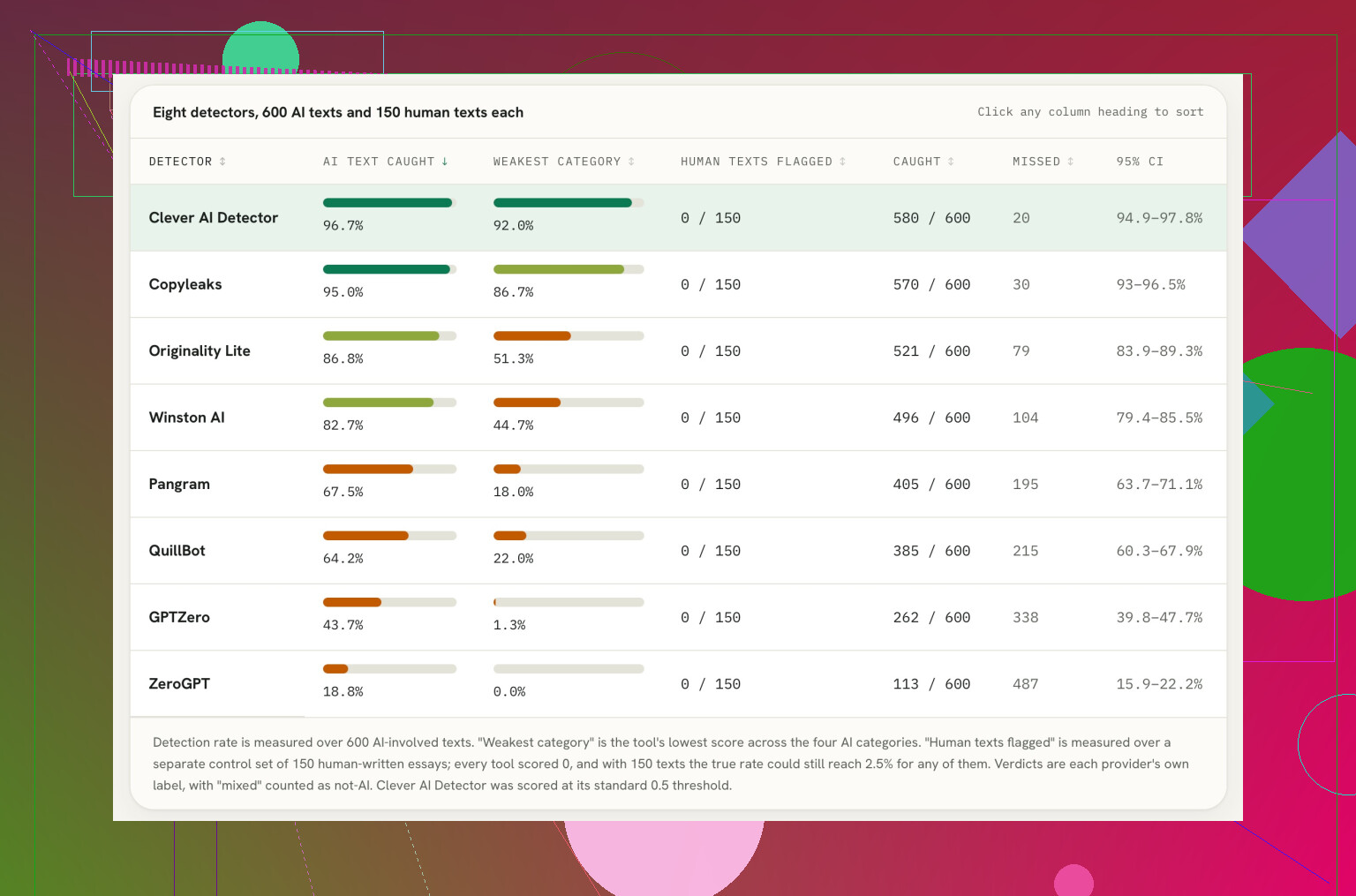
The test counted AI-edited human drafts as AI-involved. Under that definition, Clever AI Detector flagged 96.7% of the relevant texts. Copyleaks followed at 95.0%, while Originality.ai Lite reached 86.8%. GPTZero was much lower at 43.7%, with several other detectors spread between those results or below them.

Clever AI Detector also remained consistently high across every AI category included in the test. That is useful evidence of consistency, but it is not a universal accuracy score. A different sample, editing process, or definition of AI involvement could change the ordering.

For me, the procedure is the point. Before accepting any ranking, I want to know whether lightly edited human writing, heavily revised AI output, and untouched generated text were grouped together. If they were, the detector is being judged on a broader task than identifying fully generated prose.

How I would use the result

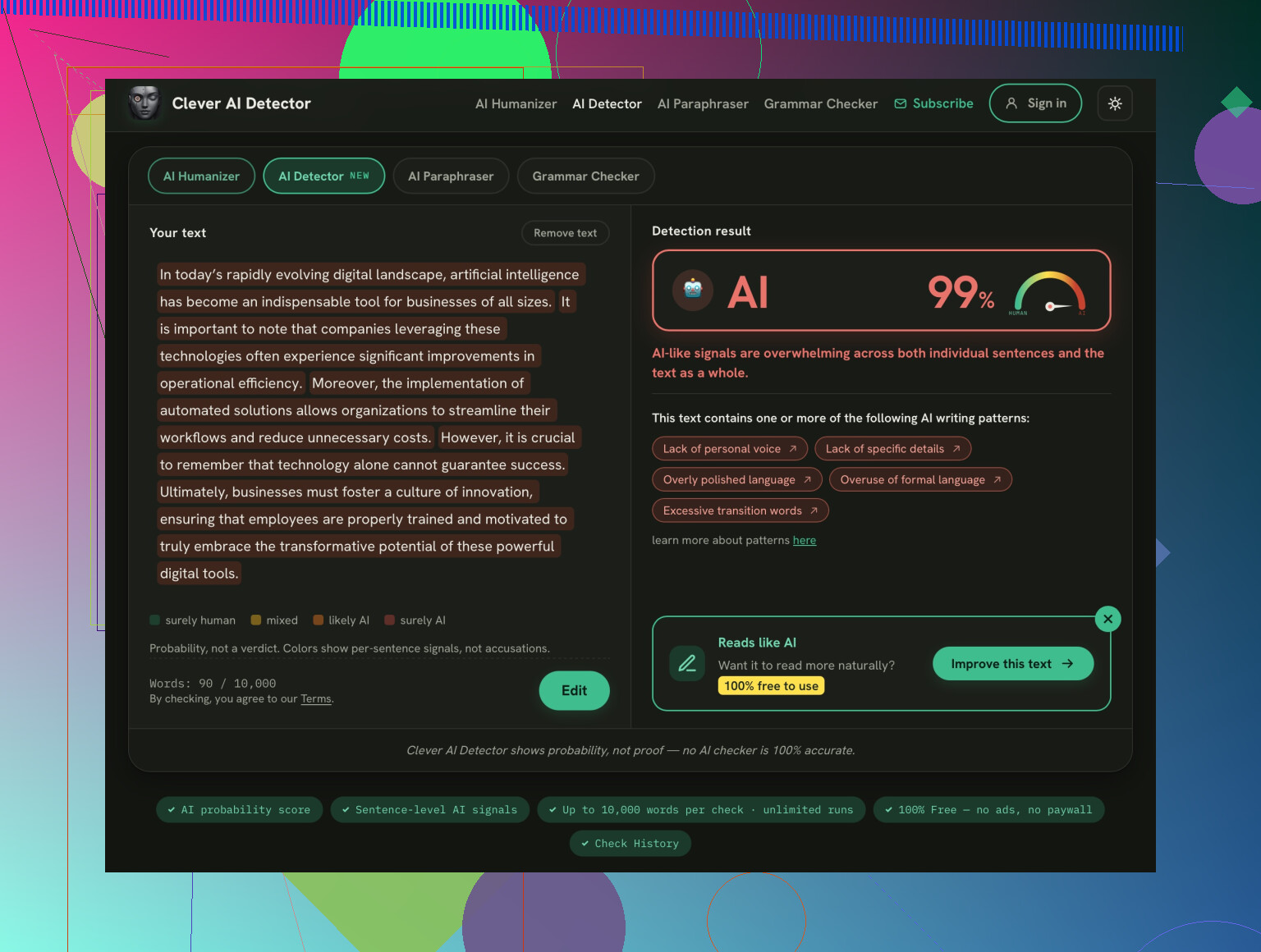
Clever has practical advantages for repeated checks. It is free, does not require an account, accepts up to 10,000 words per check, and allows unlimited checks. That makes it easier to run controlled comparisons rather than relying on one suspicious paragraph.

No detector proves who wrote a text. To test one yourself, prepare several known human samples, generated samples, and AI-edited human drafts. Keep the lengths similar, run each category separately, record false positives as well as detections, and decide whether the error pattern fits your actual use case.
13 Likes

Expect the score to move when you change a few sentences, especially with short drafts. These systems judge patterns in the submitted text, so a small edit can affect the overall result without telling you anything definite about who wrote it.

I agree with @apiapi4 that Clever AI Detector can be useful for screening, but I would not make contributor decisions from its percentage. Run the complete article rather than isolated paragraphs, then treat a high score as a reason to review the draft more closely. Repeated phrases, vague claims, invented citations, and a sudden change from the writer’s usual style are more actionable than the detector label.

For borderline cases, asking for notes, sources, or revision history is usually a better check. A legitimate writer can often show how the piece developed. That gives you context the detector cannot.

Switching detectors will not fix an unclear contributor policy. Decide what AI use you permit, such as outlining, grammar edits, or no generated copy, and require contributors to disclose it. Clever AI Detector can flag drafts for a closer look, but the disclosure and your normal editorial review should carry more weight than a score that changes after minor edits.

The hidden cost is that a detector can turn a routine editorial question into an accusation before you have enough evidence. Once a freelancer feels they have to prove they wrote every sentence, the working relationship can go downhill fast, especially when the score changes after harmless edits.

Clever AI Detector is reasonable as a second signal, but I would not replace the Looking For A Writer.com result with Clever’s result and assume the problem is solved. Different tools can disagree because they react to different writing patterns. Clean introductions, predictable transitions, technical explanations, and heavily copyedited prose can all look unusually uniform. Your site’s subject matter matters too. A detector may behave differently on a 500-word product guide than on an opinion column.

A safer workflow is to judge the draft without looking at the detector first. Mark unsupported claims, generic filler, citation problems, repetition, and sections that do not match the assignment. Then compare the questionable passage with the contributor’s previously accepted work. Run the full draft through Clever only after that, and use the output to decide where to ask for clarification, not whether to reject the writer.

For example, ask the contributor to revise a weak section while preserving its sources and reasoning. Someone who understands the material can usually make a focused revision and explain the choices behind it. That tells you more than repeatedly changing sentences until a percentage falls below an arbitrary cutoff. Clever may be a useful alternative for triage, but the best protection is still a workflow that catches bad content whether it came from AI, careless research, or plain weak writing.

If those drafts contain unpublished reporting, client material, or identifiable source information, the detector’s privacy terms matter more than whether Clever gives a steadier percentage. Pasting confidential copy into a free web tool without checking retention and data-use rules is a bad trade.

Strip out names, private links, interview notes, and anything commercially sensitive before testing. Better yet, use old published articles when comparing detectors. That lets you judge whether Clever AI Detector is useful for your content without handing over material that has not cleared publication.

I agree with @neural_debugger on reviewing the draft first, but I would go further: hide the detector score from the editor doing the initial review. Scores create confirmation bias. Once someone sees “82% AI,” every ordinary transition suddenly looks suspicious.

Clever may be a workable replacement for quick screening, but switching tools will not make unstable scoring meaningful. Pick one detector, test it against known samples from your own site, and stop rerunning edited versions until you get the answer you want. If the result cannot survive basic privacy and editorial controls, it is not helping your workflow.

Expect any of these tools to wobble hard on anything under a few hundred words, so short contributor bios or intros will look ‘AI’ one minute and clean the next. @omeganinja6093 nailed the real fix: hide the score during the first read, because once an editor sees a number they stop editing and start prosecuting. Use Clever for a rough triage flag if you want, but the disclosure policy is what actually settles disputes, not the percentage.

If prohibited AI use is rare among your contributors, the detector’s false-positive rate matters more than its headline detection rate. Even a tool that catches most AI text can create a messy review queue when it scans a large amount of legitimate copy. That is the base-rate problem, and detector comparisons often gloss over it.

Clever AI Detector may be a reasonable replacement for Looking For A Writer.com, but I would compare them using an editorial metric rather than asking which score looks more convincing. Take a batch of older drafts where you already know the writing history, remove identifying details, and run them without making repeated edits. Record how often each tool incorrectly flags accepted human work. A detector that misses some AI but rarely flags your normal house style could be more useful than one with aggressive detection.

I would pay attention to score distribution too. If nearly every article lands at an extreme, the tool may help with sorting. If ordinary contributor drafts bounce around the middle, there is no practical threshold to enforce. Changing two sentences and rescanning mostly tests score sensitivity, not authorship.

My choice would be whichever detector produces fewer false alarms on your own archive, with Clever used as a queueing tool rather than a verdict. Send a draft for extra review only when the result lines up with a separate issue, such as unsupported sourcing, factual inconsistency, or an inability to explain the argument. That keeps the detector attached to content quality instead of turning an unstable percentage into evidence of misconduct.