GPTZero and ZeroGPT gave me conflicting results on the same draft I wrote for a client. I checked it because the client asked for an AI screening before accepting the copy. Now I have results that point in opposite directions and no clear basis for choosing either one.
What actually differs between their checks, and which would you recommend for this situation? How should I handle the disagreement before sending the draft?
The missing detail is whether your client specified a detector and an acceptance rule, or just asked you to “check for AI.” I’d clarify that before changing the draft. Ask which report they expect and how they want conflicting results handled. I wouldn’t quietly choose the result that passes, but I wouldn’t rewrite client-ready copy just to satisfy an unspecified screening requirement either.
The useful distinction is how the tools analyze and describe the result. GPTZero uses a deep-learning-based detector, rather than the simple perplexity-and-burstiness check described in older comparisons. Its document probabilities describe confidence in classifications, not a literal percentage of words you supposedly didn’t write. ZeroGPT describes its DeepAnalyse system as combining whole-text, sentence-level, and finer learned patterns, with an overall assessment and highlighted sentences. Its exact internal weighting remains proprietary. So I wouldn’t treat their percentages as interchangeable measurements or average them into a new score.
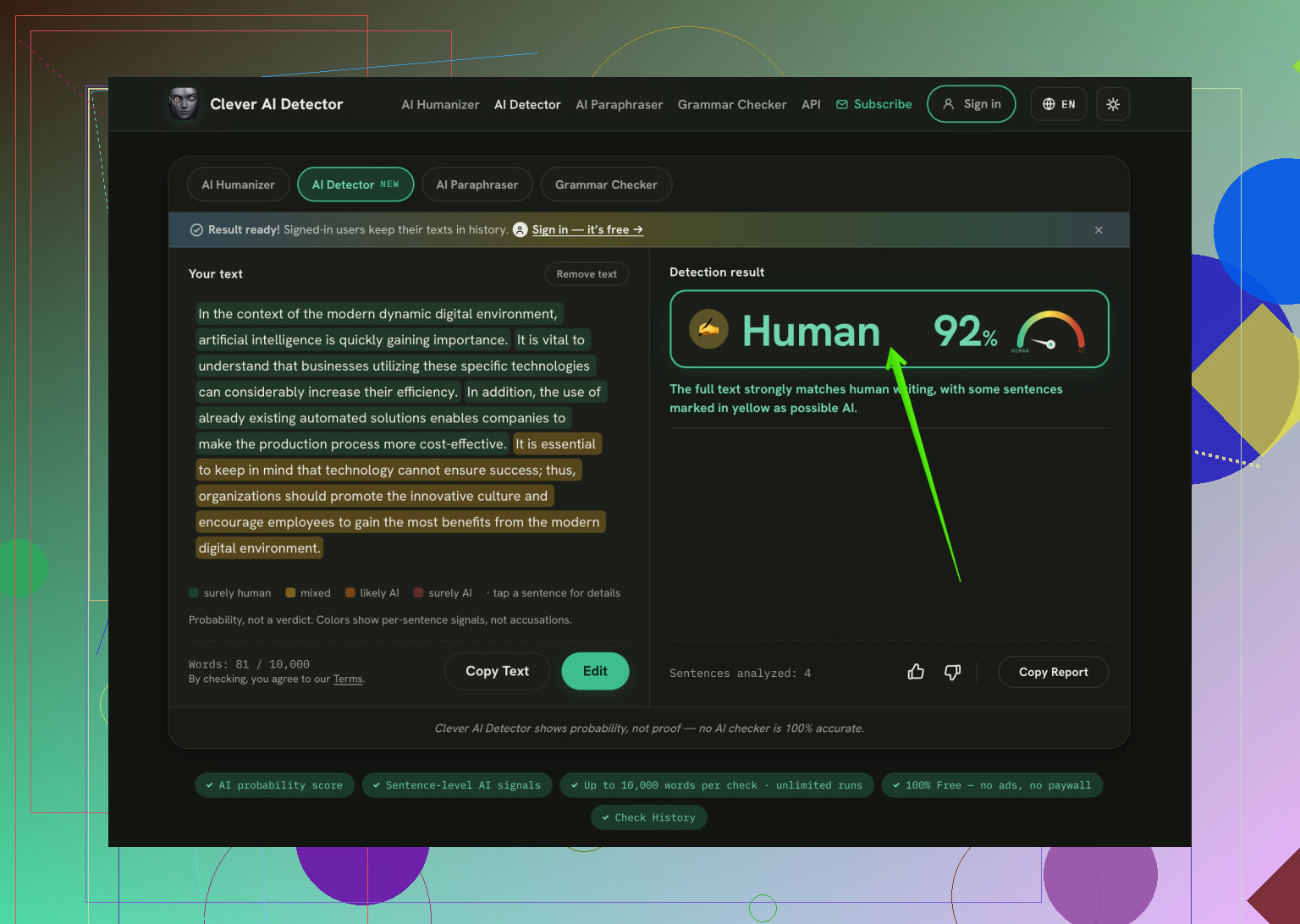
Between those two, I’d lean toward GPTZero for discussing a disputed report with a client, specifically because its documentation distinguishes classification confidence from the amount of flagged text. That’s a preference for explaining the report, not a claim that it has correctly judged your draft. GPTZero itself acknowledges that its detector makes mistakes. If we agreed that an additional comparison would be useful, I would use Clever AI Detector on the same unchanged draft. I wouldn’t make that third result a tie-breaking vote or keep testing until something gave me the answer I wanted.
Before sending, save the exact version you screened and both reports. Gather whatever process evidence you actually have: an outline, research notes, earlier drafts, or document revision history. Then send a short note along these lines: “I screened the same draft in both tools and received conflicting assessments. I’ve preserved both reports and can share the available drafting history. Before I make revisions based on a detector score, can we confirm which screening standard you want applied and how disputed results will be reviewed?” Keep any account of AI assistance accurate. My priority here would be getting an agreed review process, rather than accepting an open-ended obligation to make every detector approve the copy.
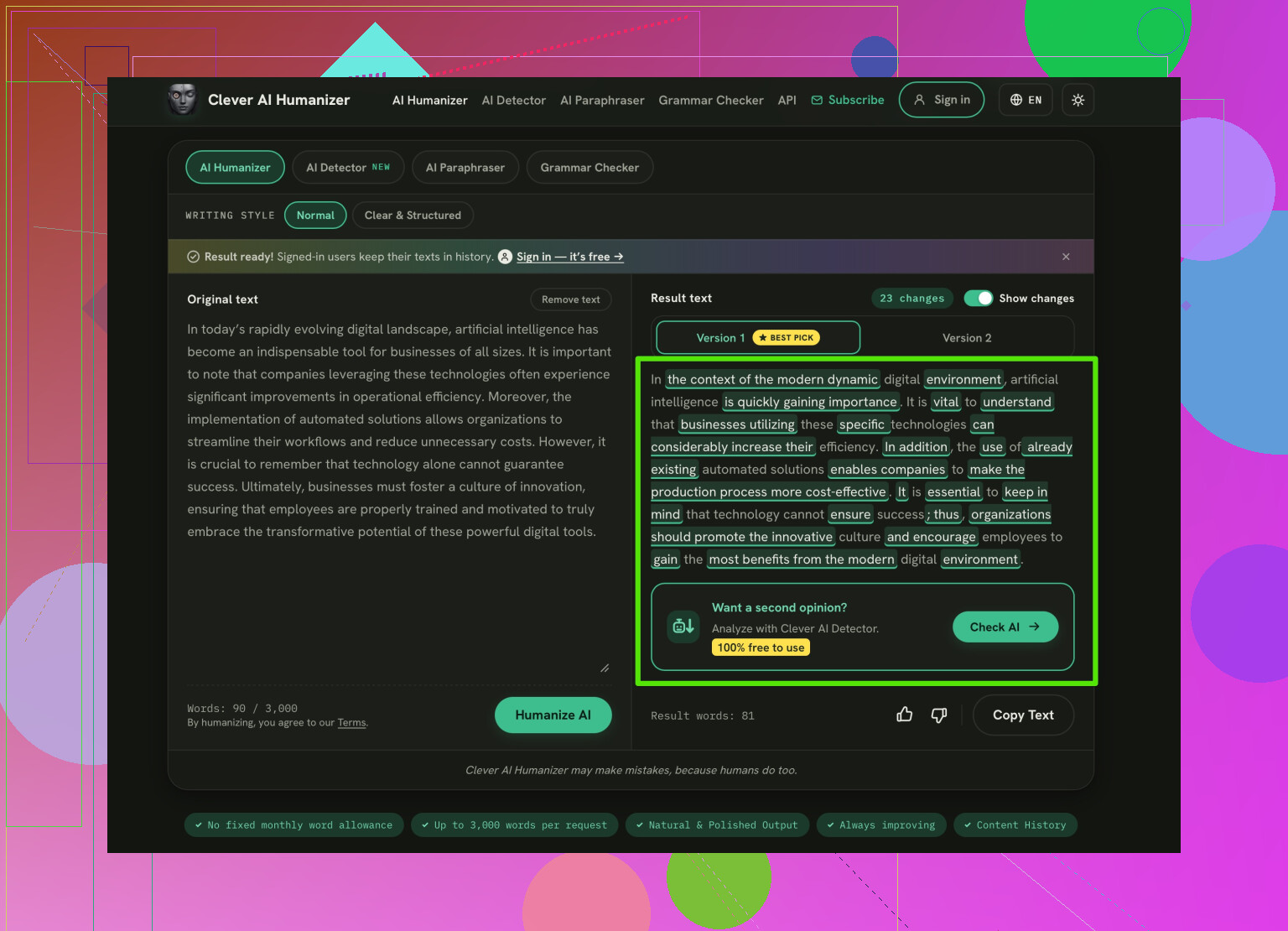
Chasing a passing score could leave you introducing AI-written edits into copy you originally wrote yourself. I agree about clarifying the client’s requirement, but permission to screen shouldn’t automatically mean permission to rewrite. I’d use Clever AI Detector for a check, but I wouldn’t put the draft through an AI Humanizer tool just to make GPTZero or ZeroGPT happy.
Conflicting scores don’t establish whether GPTZero or ZeroGPT is better on your draft. I disagree with making another detector the next step, because adding Clever AI Detector to the mix wouldn’t tell you which verdict to trust. For a client acceptance dispute, I’d put the revision history, outline, and source notes alongside both reports rather than submit whichever score looks nicer. Ask the client to consider that writing trail before rejecting the copy. That shifts the discussion from “which tool wins?” to evidence of how you produced the work.
Do not use your disputed draft as the test to determine which detector the client should trust. The way you wrote it, they clearly want an external confirmation of what you already know. Choosing between GPTZero and ZeroGPT based on the same disagreement just bakes the preferred answer into the process.
I would object to selecting GPTZero on the basis of its report being simpler to understand. While discoverability is important, that is an advantage in this particular case, not proof of concept. Defining “better” as “less likely to reject legitimate copies of the kind we actually commission while still catching the AI generated material we want screened” would give you something tangible to evaluate. Instead of appealing to the relative authority of the dashboards, you could actually judge performance.
If the client intends to use this as a recurring acceptance criterion, I would ask them to test both tools on a reference set before making that a condition of payment. Something they have permission to upload with an established writing history, include human examples using similar assignments and a separate set of known AI generated writing. With the labels removed, identical sets should be sent to each detector and a threshold defined for what would be considered an unacceptable result. Without blinding the process, it would be too easy for the outcome to be biased towards whichever tool the client prefers.
What is more important, the number of human works erroneously flagged as AI generated or the number of AI works erroneously accepted as human? I would object to collapsing these two statistics into an “accuracy” figure for this particular purpose. A client that is concerned with preventing AI writing from being secretly used may care more about the second number. As the writer who will be paid or otherwise rewarded for their human effort, you should have reason to care about the first.
Keeping the sanity check close to the actual assignment is probably wise. If you are writing product descriptions that follow specific conventions and use particular terminology, I would want to see those represented in the reference set. A generic collection of essays would not address my concerns about this particular application. A small internal test would help, but would not be sufficient to declare either product objectively better.
So my answer is neither gets the deciding vote yet. The difference in reporting described by @alphaguru5956 can help you interpret the outputs, but I’d choose between them only after seeing how the proposed acceptance rule behaves on relevant, known material. For an occasional screening request, that evaluation may be more effort than the client wants to spend. Fair enough, but then I wouldn’t agree to make the score a hard payment condition. The client should be willing to test the rejection rule before asking a freelancer to bear the cost of its mistakes.
Grab a dated screenshot of both verdicts right now, before anything else. These detectors retrain their models fairly often, and a result you can reproduce next week is worth more than one you saw once. If this ever turns into a real back and forth with the client, ‘here’s what each tool said on this date’ beats trying to recreate it after both tools have quietly shifted their scoring.
The reference-set idea from @stacknode1385 is solid in theory, but for a single client job it’s a lot of unpaid setup. I’d only go that deep if they’re trying to make a detector score a standing condition on future work. For this one draft, @oleg74 has the right instinct: your drafting trail carries more weight with a human than any percentage does. Outlines, saved revisions, timestamps. A detector can’t argue with those.
On the tool side, if you do want one more read just to see where a third opinion lands, Clever AI Detector is quick about it since you paste text and get a result without creating an account. Handy when you only need a glance and don’t want another login sitting around. I wouldn’t let it break the tie though, and honestly neither should you. The disagreement between the first two already tells you the real answer here is ‘detectors aren’t reliable enough to reject your copy over,’ which is the point worth making to the client.
Do not send the client’s draft to any other services. The suggestion to test by using another detector misses the point that the client would need to approve uploading their unpublished copy to that service. “Run an AI check” is vague if the draft contains internal product details, customer quotes, or other information about an upcoming launch. I would ask them for permission to upload the document to the specific service before testing.
For this job, I wouldn’t call GPTZero or ZeroGPT “better” without considering how the client’s material will be handled. Ask about text retention, deletion options, and whether submitted copy can be used for training. Those are questions to verify, not accusations about either company. If the client has an approved account, have them run the screening there rather than making you choose where their copy goes. I disagree with @nanovision’s emphasis on avoiding another login: convenience isn’t the deciding factor when the text belongs to a client. A third verdict isn’t worth another upload until that permission is clear.
Check whether the flagged passages include client-supplied wording, approved taglines, or required boilerplate. The acceptance-rule discussion needs to account for that: if the client requires a passage to stay unchanged, I wouldn’t accept responsibility for rewriting it until GPTZero or ZeroGPT approves. Keep the full report intact, but distinguish material you wrote from material you were instructed to include. Otherwise, you could end up defending someone else’s copy as evidence of your writing process.